⚠️Mattress/rug order pricing information important !
Others
Professional training in fixed stilts 2026 – Stilts from bottom to top with the Tac O Tac Company in Saint-Junien (Haute-Vienne)
From 28 september to 02 october 2026
Tac O Tac
Price
Prices : Non communiqués
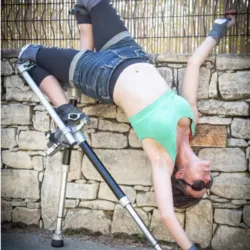
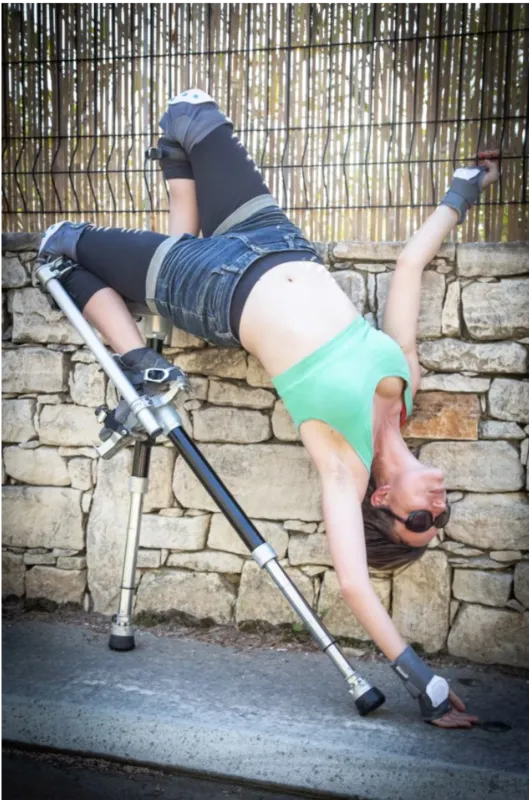
Stilt walking is among the oldest and most universal disciplines in circus arts and live performance. Present for centuries in folk traditions, festivals, street theatre, and artistic practices worldwide, stilt walking has evolved into many forms: urban stilts, wooden, aluminum, or metal stilts, one-legged models, four-legged stilts, and even pneumatic stilts. This diversity testifies to the richness of the discipline and the numerous possibilities it offers artists in terms of creation, movement, and stage expression.
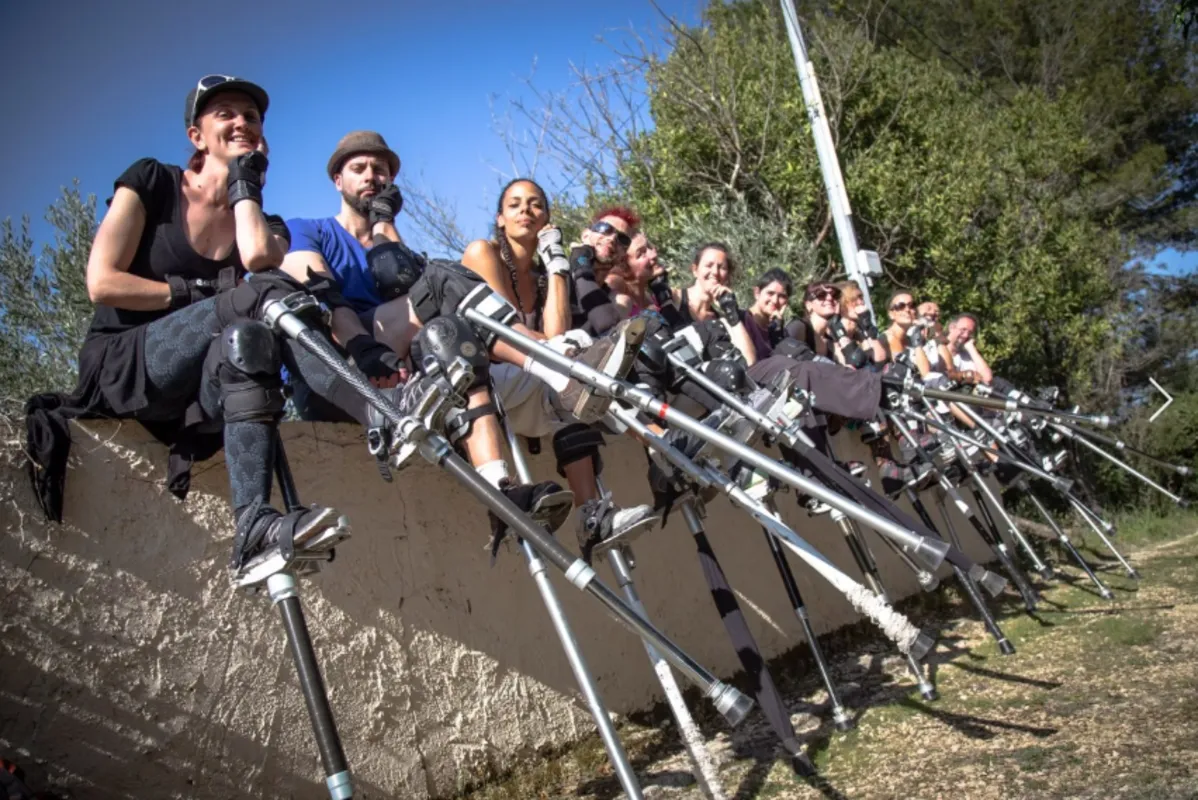
Building on this experience, Compagnie Tac O Tac offers a professional training course entitled "Stilts from bottom to top", organized from September 28 to October 2, 2026. This intensive week represents 35 hours of training and is aimed at a group limited to 10 trainees, allowing individualized support and progression adapted to the level of each.
This training program is designed for acquisition, discovery, and skill development, primarily aimed at professional stilt walkers, freelance artists, performing arts professionals, and experienced amateurs wishing to take their practice to the next level. The objective is not only to improve technique but also to develop a truly artistic and professional approach to the discipline.
The workshop is led by Brice Durand, a performing arts professional, trainer, and accomplished stilt walker with the Compagnie Tac O Tac. Drawing on his extensive field experience, he guides participants through both the technical aspects and the artistic and physical dimensions essential for a sustainable stilt-walking practice.
The training begins with an introduction of the trainees, the trainer, and each participant's personal objectives. This first step allows for the identification of individual expectations in order to adapt the exercises and progression to the specific needs of the participants.
A significant portion of the training is dedicated to learning about the equipment. Trainees study the technical characteristics of different types of stilts – wood, aluminum, metal, and pneumatic – to understand their specific features, advantages, and limitations. The program also includes disassembling the stilts, analyzing their operation, reassembling them, and considering potential improvements to the equipment. A thorough introduction to safety regulations completes this essential part of the training.
One of the main focuses of the training is on biomechanics applied to stilt walking. Participants learn about the most used muscle groups, strengthening methods to improve stability and physical longevity, and essential stretching exercises to prevent injuries. This specific physical preparation is practiced daily, both at the beginning and end of the day, to establish good habits in daily practice.
Throughout the week, trainees work on fundamental techniques: core strength, body posture, pushing, balance, landings, cushioning, and rhythm control. The progression then allows them to tackle increasingly complex situations based on their existing skill level. Participants develop their proficiency on four-legged stilts, discover working on very tall stilts, and receive an introduction to pneumatic stilts, a signature discipline of the Compagnie Tac O Tac.
Beyond pure technique, significant emphasis is placed on developing artistic expression. Trainees learn to enrich their stage presence, to use movement as a true body language, and to integrate stilts into a choreographic approach. The work also focuses on the use of accessories that expand artistic possibilities and allow for the exploration of new forms of creation adapted to street performances, promenades, or contemporary works.
Outdoor outings are organized to expose participants to real-life practice situations. They move across different terrains and work on their comfort in varied environments, with the aim of being able to move confidently in complex contexts such as stairs, walkways, steep slopes or urban spaces.
The training also encourages reflection and creativity. While familiar figures are analyzed in detail, the group is also invited to explore movements that are still underdeveloped or simply imaginable, thus fostering genuine artistic research within the discipline.
All these steps are organized according to a daily pedagogical progression, allowing participants to gradually acquire the technical, physical, and artistic skills covered during the week. Theoretical input is systematically followed by practical applications, then by on-site assessments to measure learning and adjust the work if necessary.
The company provides trainees with a 200 m² workspace, outdoor areas, a meeting room, and internet access. Accommodation is also available in dormitory-style rooms, with two bathrooms and a fully equipped kitchen, making it easy to welcome participants from all over France.
Trainees must bring their own stilts, as well as their knee pads, scaphoid protectors and sports shoes suitable for this demanding activity.
At the end of the training, a practical assessment and a pedagogical evaluation measure the progress made. A certificate of completion is issued to each participant, attesting to their participation in this week of professional development.
Through an approach that blends technique, physical preparation, safety, artistic exploration, and real-world application, "Stilts from Bottom to Top" offers a particularly comprehensive training program for artists wishing to deepen their mastery of fixed stilts and enrich their skills in the fields of live performance, contemporary circus, and street arts. It provides participants with the necessary tools to gain confidence, develop their creativity, and push the boundaries of their practice within a professional framework guided by one of the most renowned French companies in the world of acrobatic stilts.
Building on this experience, Compagnie Tac O Tac offers a professional training course entitled "Stilts from bottom to top", organized from September 28 to October 2, 2026. This intensive week represents 35 hours of training and is aimed at a group limited to 10 trainees, allowing individualized support and progression adapted to the level of each.
This training program is designed for acquisition, discovery, and skill development, primarily aimed at professional stilt walkers, freelance artists, performing arts professionals, and experienced amateurs wishing to take their practice to the next level. The objective is not only to improve technique but also to develop a truly artistic and professional approach to the discipline.
The workshop is led by Brice Durand, a performing arts professional, trainer, and accomplished stilt walker with the Compagnie Tac O Tac. Drawing on his extensive field experience, he guides participants through both the technical aspects and the artistic and physical dimensions essential for a sustainable stilt-walking practice.
The training begins with an introduction of the trainees, the trainer, and each participant's personal objectives. This first step allows for the identification of individual expectations in order to adapt the exercises and progression to the specific needs of the participants.
A significant portion of the training is dedicated to learning about the equipment. Trainees study the technical characteristics of different types of stilts – wood, aluminum, metal, and pneumatic – to understand their specific features, advantages, and limitations. The program also includes disassembling the stilts, analyzing their operation, reassembling them, and considering potential improvements to the equipment. A thorough introduction to safety regulations completes this essential part of the training.
One of the main focuses of the training is on biomechanics applied to stilt walking. Participants learn about the most used muscle groups, strengthening methods to improve stability and physical longevity, and essential stretching exercises to prevent injuries. This specific physical preparation is practiced daily, both at the beginning and end of the day, to establish good habits in daily practice.
Throughout the week, trainees work on fundamental techniques: core strength, body posture, pushing, balance, landings, cushioning, and rhythm control. The progression then allows them to tackle increasingly complex situations based on their existing skill level. Participants develop their proficiency on four-legged stilts, discover working on very tall stilts, and receive an introduction to pneumatic stilts, a signature discipline of the Compagnie Tac O Tac.
Beyond pure technique, significant emphasis is placed on developing artistic expression. Trainees learn to enrich their stage presence, to use movement as a true body language, and to integrate stilts into a choreographic approach. The work also focuses on the use of accessories that expand artistic possibilities and allow for the exploration of new forms of creation adapted to street performances, promenades, or contemporary works.
Outdoor outings are organized to expose participants to real-life practice situations. They move across different terrains and work on their comfort in varied environments, with the aim of being able to move confidently in complex contexts such as stairs, walkways, steep slopes or urban spaces.
The training also encourages reflection and creativity. While familiar figures are analyzed in detail, the group is also invited to explore movements that are still underdeveloped or simply imaginable, thus fostering genuine artistic research within the discipline.
All these steps are organized according to a daily pedagogical progression, allowing participants to gradually acquire the technical, physical, and artistic skills covered during the week. Theoretical input is systematically followed by practical applications, then by on-site assessments to measure learning and adjust the work if necessary.
The company provides trainees with a 200 m² workspace, outdoor areas, a meeting room, and internet access. Accommodation is also available in dormitory-style rooms, with two bathrooms and a fully equipped kitchen, making it easy to welcome participants from all over France.
Trainees must bring their own stilts, as well as their knee pads, scaphoid protectors and sports shoes suitable for this demanding activity.
At the end of the training, a practical assessment and a pedagogical evaluation measure the progress made. A certificate of completion is issued to each participant, attesting to their participation in this week of professional development.
Through an approach that blends technique, physical preparation, safety, artistic exploration, and real-world application, "Stilts from Bottom to Top" offers a particularly comprehensive training program for artists wishing to deepen their mastery of fixed stilts and enrich their skills in the fields of live performance, contemporary circus, and street arts. It provides participants with the necessary tools to gain confidence, develop their creativity, and push the boundaries of their practice within a professional framework guided by one of the most renowned French companies in the world of acrobatic stilts.

3€00
2€00
Softball 70 or 120g
The best-selling toy for beginners! Doesn't roll away, soft to the touch, easy to grasp. Perfect for developing motor skills and confidence.
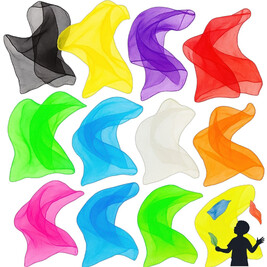
2€50
2€00
NetJuggler Juggling Scarf
Ideal for children aged 4 and up to discover the sport. Slow flight: understanding rhythm and developing coordination.

4€00
3€00
Soft Chinese plate + chopsticks
Essential for beginners! Made of unbreakable, flexible plastic, ideal for success and confidence. Perfect for schools.



4€00
3€20
Star beanbag
Ergonomic 6-panel design for a better grip. Robust, ideal for all levels and for developing dexterity.
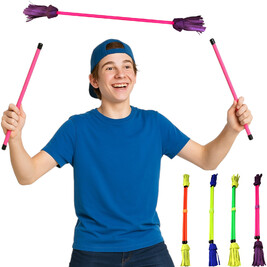
24€50
18€50
NEO flower stick set
Full silicone grip for a perfect hold. The complete kit for learning safely and without slipping.