🎪 Building the Ephemeral: The Art of Big Top Assembly at "Baltringues et Cie"
The big top
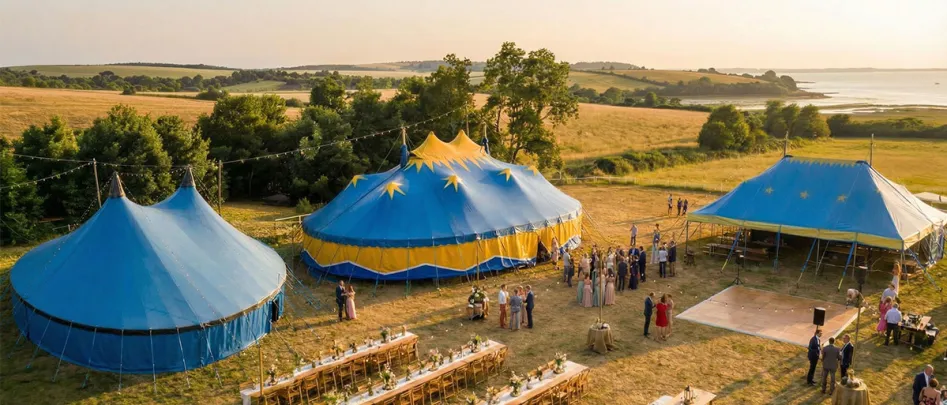
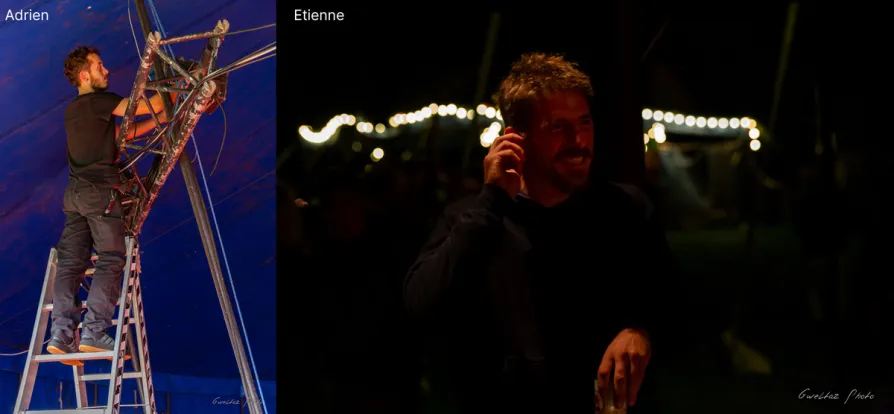
For the public, it's a blue or yellow silhouette emerging from a field—a promise of celebration. For those who erect it, it's a battle against gravity , a geometric composition, and a way of life. As Étienne Marx hands over the reins of the Breton company Baltringues et Compagnie to Adrien Le Guellec, we delve into the behind-the-scenes world of this unsung profession.
If you follow Compagnie Baltringues and want the full interviews that made this article possible, you can find the complete interview here .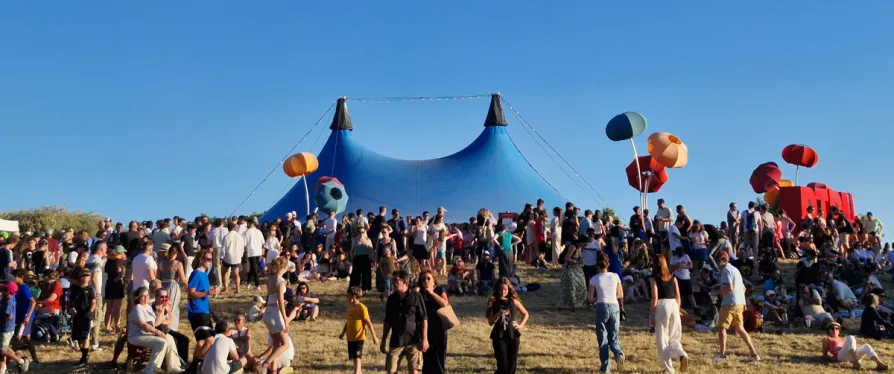
I. Genesis: Why do we become "Baltringue"?
People often imagine that buying a circus tent is a romantic idea. For Étienne, the founder, the reality was more pragmatic: it was a desperate solution to secure funding and have a training space. A circus tent isn't just a canvas and poles: it's a place, and that changes everything.
“Baltringues et Compagnie was born out of a very real need. Since we don't receive any subsidies, each new production required us to find funding. And on top of that, we didn't have a permanent place to rehearse. After talking about it for a while, some friends told us: 'Buy a big top. In the winter, you rehearse under it. In the summer, you rent it out.' It wasn't a childhood fantasy; it was almost a practical solution. But a big top isn't just a canvas and poles. It's a place. And that changes everything.”
The chosen name deserves an explanation: "baltringue" historically refers to the poorly paid and stigmatized tent erectors. The choice of name was intentionally provocative and playful.
“I discovered the word ‘baltringue’ in a book published by Gallimard. Originally, ‘baltringues’ were the circus tent erectors. The ones who stretched the tarpaulins, who hammered in the pegs (the giant ‘sardines’). Historically, they were poorly paid workers, sometimes only partially declared, which generated stereotypes. When we discovered this, we thought it was perfect. We chose this name because it made us laugh, and because at the time, nobody called themselves that. Today, you see them everywhere!”
II. The Technique: 10 cm that changed the world
Putting up a big top is like transforming a vacant lot into a secure palace. It all starts with staking out the area, which is marking out the lines on the ground: the initial geometry dictates everything else. A 10 cm error on the ground can translate into a much larger error at the top of the masts.
“A circus tent is all about geometry. If the base isn't right, everything else doesn't work properly... A 10 cm error on the ground becomes 30 cm at the top of the masts. The tensions are no longer balanced, the canvas is strained, the masts don't work correctly. Marking out the ground and planting the stakes is like laying the foundations of a house.”
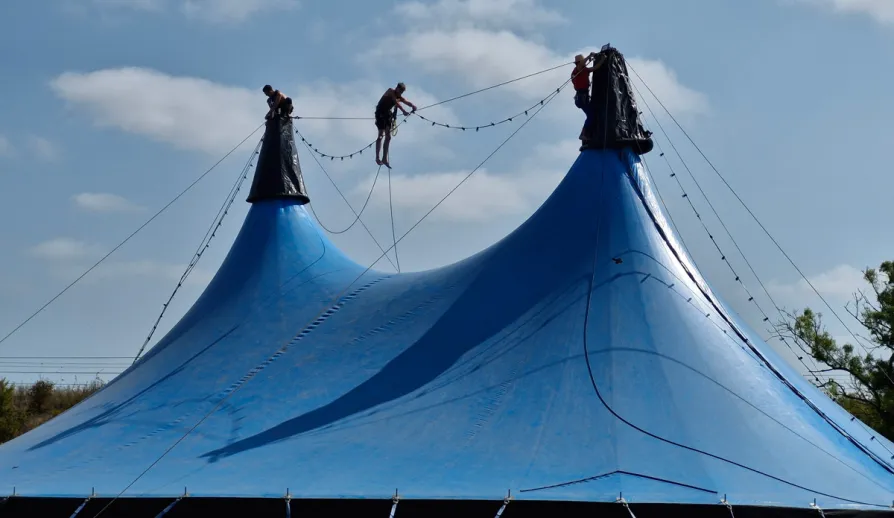
The layout phase is a satisfying moment: sometimes a compass or Pythagorean calculations are used to help everything take shape. Raising the tarpaulin is a team effort; two people operate the winches while a coordinator makes adjustments. When the tarpaulin is raised, the scale of the work becomes clear to everyone.
- Staking : precise marking on the ground, geometric foundation.
- Lifting : coordination of winches and safety of teams.
- Tension : checking the stays (support cables) and straps to avoid creases and bumps.
- Visual check : a properly fitted tarpaulin has no creases or bumps and displays uniform tension.
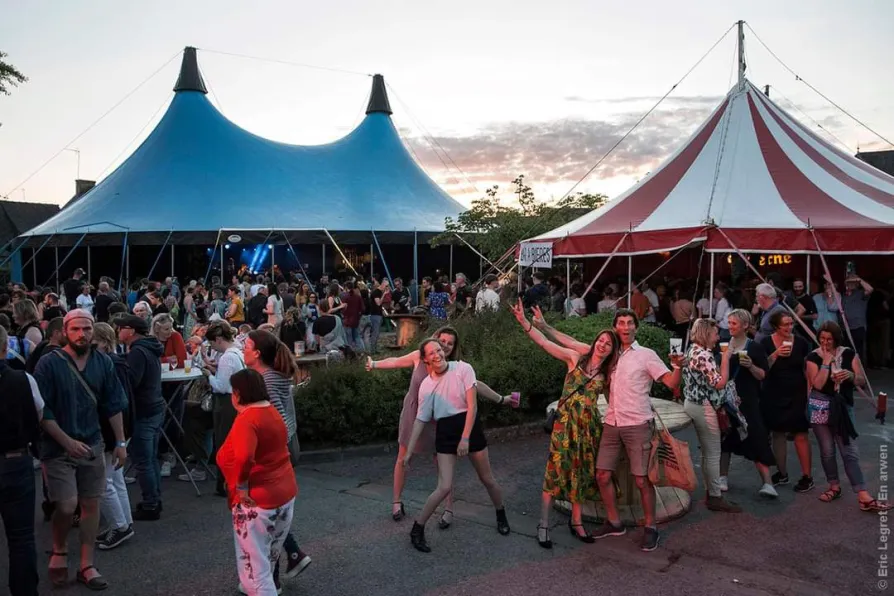
"We know this from experience. We check the tension at each stage: the mast stays, the tarpaulin straps... We can tell by the look of the tarpaulin if it's properly installed: no creases, no bulges, and uniform tension."
III. Solutions to the Impossible: Tarmac and Storms
The job requires adapting to the most improbable terrains: asphalt, hidden slabs, slopes… sometimes you have to invent technical solutions and accept long and tiring assemblies.
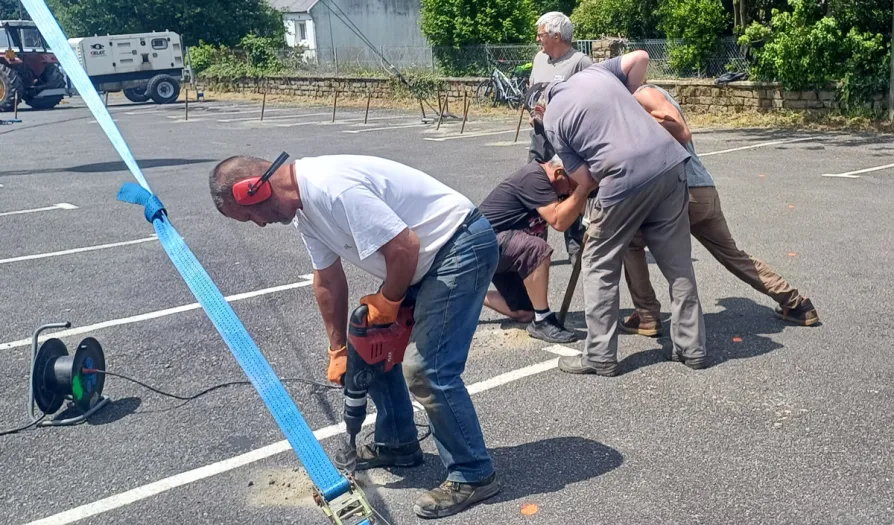
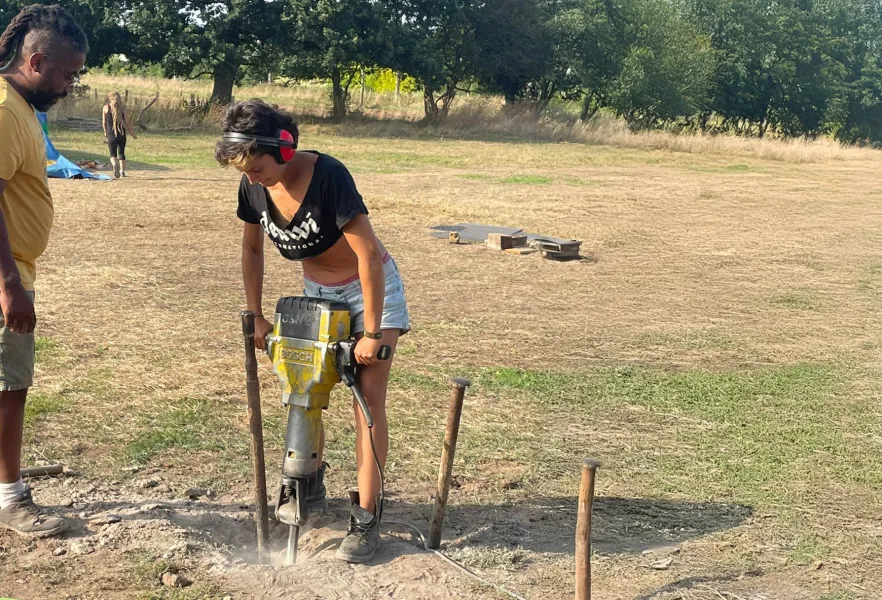
“We had to build on asphalt. The solution was to drill. We rented a hammer drill, a 40mm bit, and a depth of 80cm. And then, surprise: under the asphalt, a reinforced concrete slab from an old schoolyard. We had to make each hole by hand, only 20cm deep. It took us twice as long as planned, but the structure held. An exhausting but extremely satisfying build.”
The weather is the ultimate arbiter: wind can make an installation dangerous. While marquees are often certified to withstand strong gusts, there are limits.
“October 2010, Finistère. They were forecasting gusts of 100 km/h. Most big tops are certified for that, but only in gusts. Here, the wind was really picking up. The audience evacuated themselves, the atmosphere changed. A lacing on one of the tent's 'socks' came undone. I climbed onto the roof to reattach it. That's when I saw what it was like: the roof was swinging vertically by a good meter. A giant trampoline! My partner yelled at me to come back down. She was right. When a storm hits, you don't save the equipment. You close everything up and protect the people.”
IV. The Human Factor: "I hope no one dies"
Participatory construction is an emotionally rich experience but also carries risks: tired or intoxicated volunteers can make potentially serious mistakes. Experience and guidance on the construction site are essential.
“A volunteer, a little tipsy, couldn’t tell the difference between a stay (the cable holding the mast) and a ratchet (the tarp strap). He let go of the stay. Suddenly, I saw the 9-meter mast swinging towards me. In my mind, it was clear: I’m done for, 25,000 euros in debt, and I hope no one dies. Luckily, other volunteers jumped on the rope and held everything in place. Since then, I always tell this story before every work site. A story is worth a thousand words.”
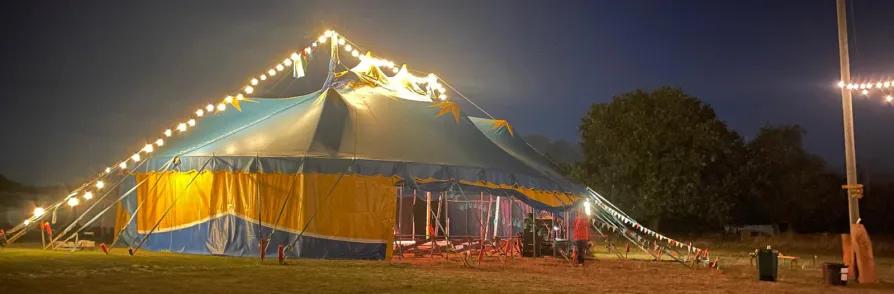
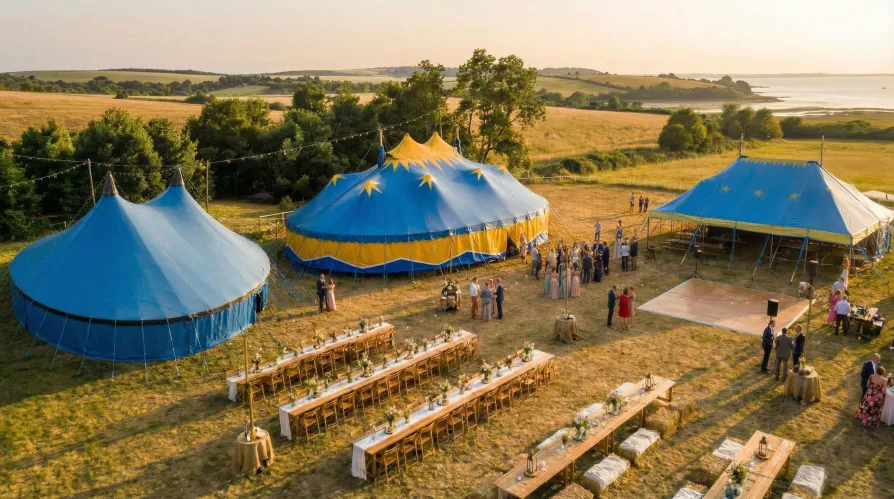
Despite the fears, the human aspect of the work remains central. Adrien talks about wedding setups: the family rallying together, the joy of the bride and groom, the emotion of bringing a celebration to life.
“I’m thinking about wedding photo shoots. That moment when friends and family gather in the field to bring the celebration to life. You can see their joy and excitement in the eyes of the bride and groom. It’s the start of a very important weekend for them. This kind of moment is touching and full of humanity.”
V. The Next Generation: Passing on the keys to "The Big Blue"
Étienne leaves the road and entrusts his equipment and knowledge to Adrien. The transfer involves both technical mastery and an understanding of the company's ethos.
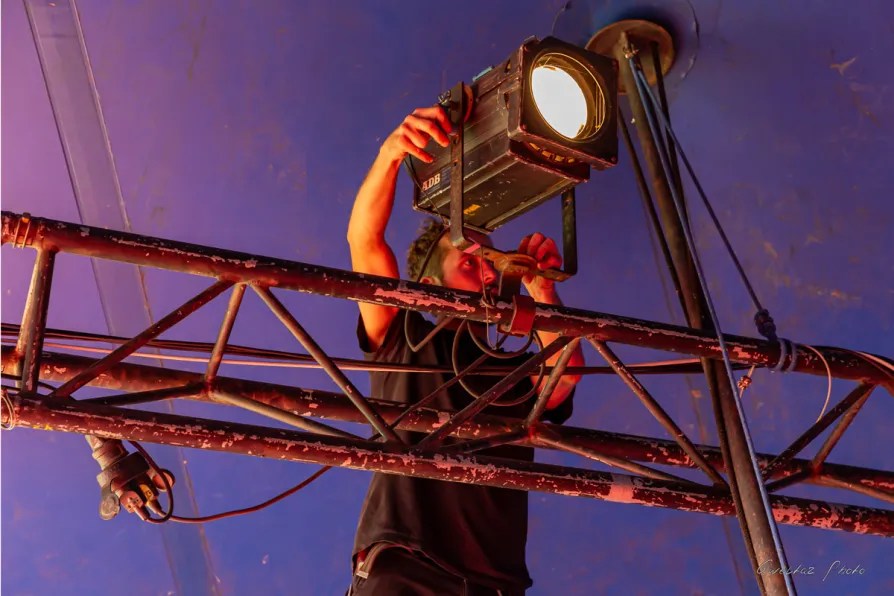
"Adrien has all the technical skills. He knows the company, he knows how to manage teams, he has the 'Baltringue spirit'. He learned to design zip lines, handle winches, ropes, pulley systems... He was already rock solid before joining us."
"What changes the most is the management. When your name is on the contract, you're responsible for your task. When it's on the facade, you're responsible for everything: customer relations, security, reputation... We're not just putting up a big top, we're carrying out a project."
VI. Advice for future editors (and jugglers)
- Rigour : every step counts, we don't skip steps.
- Patience : everything takes time, especially in difficult conditions.
- Team spirit : you can't set up a big top alone and you have to like traveling.
"Repetition and precision. A juggler works for hours to make the movement appear fluid. A rigger works for hours to know their big top. In both cases, the public only sees the end result, not the discipline behind it."
VII. The Final Word: Odors and Bitumen
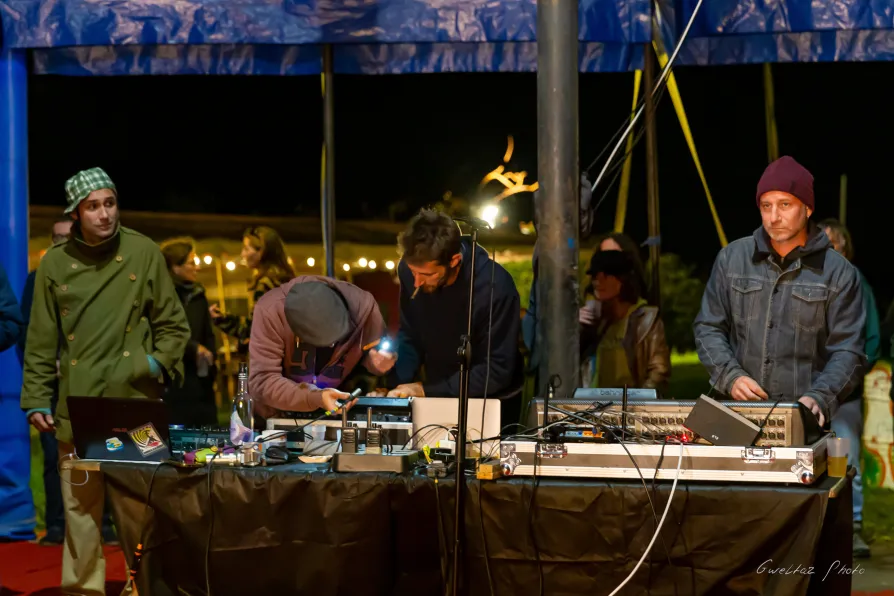
In winter, away from the trucks, the work continues: administration, site visits, planning, checking and repairing equipment — everything that prepares for the first blows of the sledgehammer.
"A rigger isn't just someone who hammers in clamps. We handle the administrative work, site visits, scheduling, and we check and repair the equipment. It takes a lot of organization before we even hit the sledgehammer."
"If I had to sum up these 25 years? Visually, it's the road, the windshield, and the white lines flashing by. As for the smell, there are two. The smell of wet plastic when you reopen a big top after four months (sometimes with a dead mouse inside; the smell is disgusting but typical!). And the smell of fuel from the hot air cannons. That smell, even with air fresheners, lingers on your sweater for years. It's a deeply ingrained memory."
If you ever see "The Big Blue" or "The Camel" standing in a field, remember: underneath, there are men listening to the canvas vibrate.
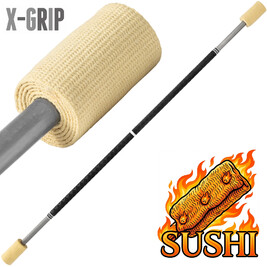
Geryon contact fire staff
Contact staff equipped with X-GRIP. Kevlar: 100mm.
Length: 1m50.
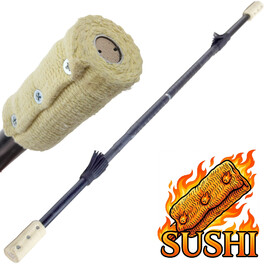
Fire contact staff - Gora
Staff Contact fire. Aluminum 7075. Kevlar: 100mm.
Length: 1m50.
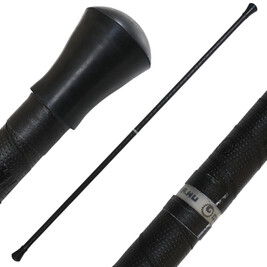
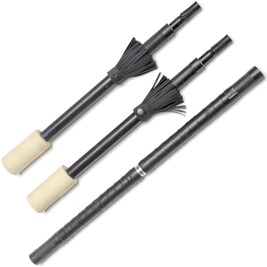
Removable fire contact staff, aluminum or carbon fiber
Gora removable contact staff, 7075 aluminum. Kevlar: 100mm.
Length: 1.50m.
Comments
!Be the First to comment!
