Hand candles - by Gora
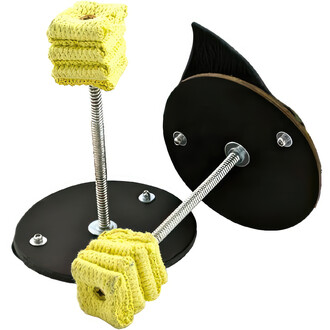

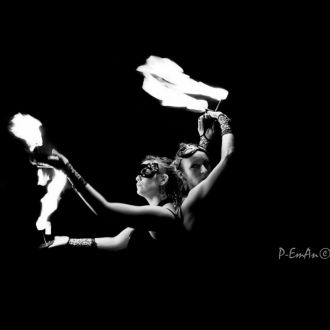

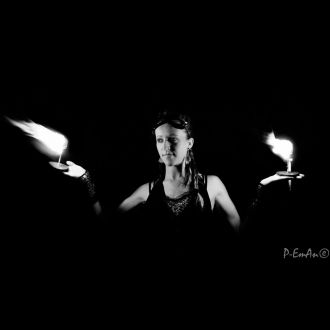
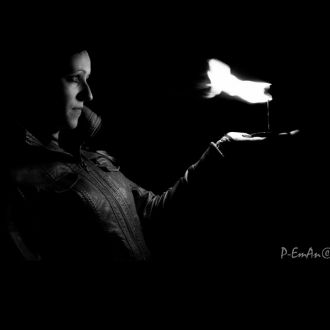
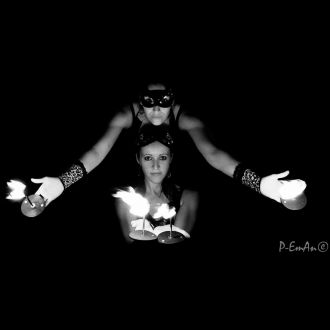
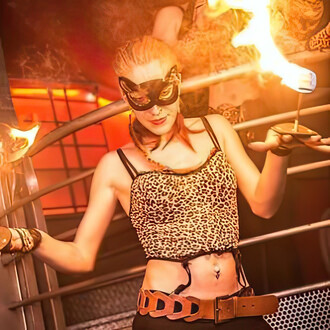
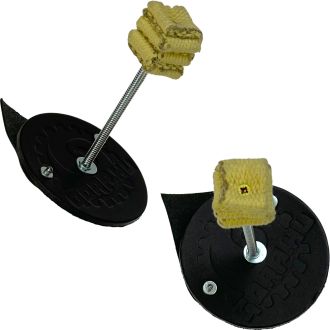
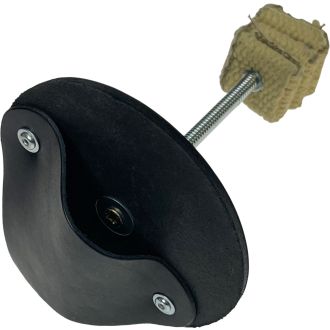
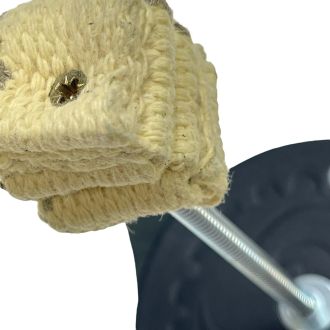
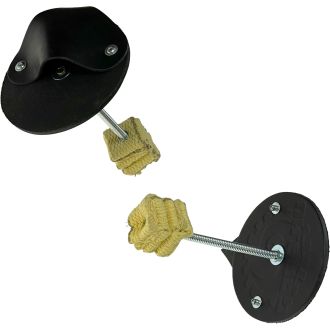
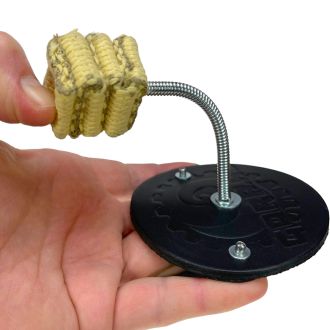
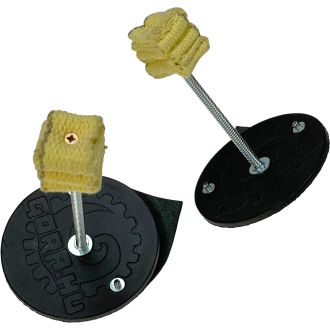
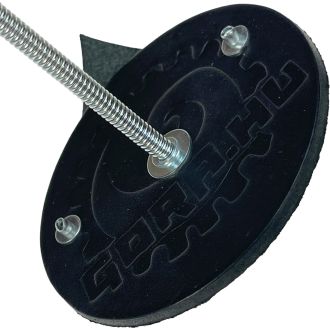
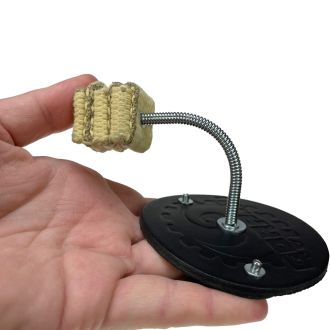
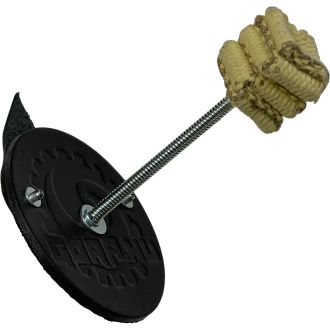
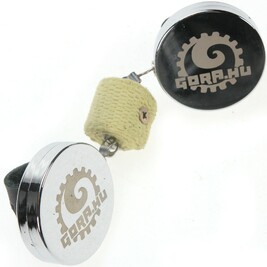
The equipment consists of a base with thermal leather insulation and a spring-loaded structure. Designed for flow arts practices requiring flames suspended around the body.
Photo credits: Payette Animation, Cie C'est pas permis, P-EmAn and Sarah Escola.

NetJuggler's review
This apparatus has the advantage of being very accessible: it doesn't require the technical skills of throwing or catching objects inherent in classical juggling. The fire hands integrate naturally into dance choreography, physical theatre, or fakirism, creating the fascinating illusion of a flame levitating above your palms.⚠️ Important technical point: Keep in mind that heat rises. When your choreography requires you to point your palms (and therefore the lit wicks) downwards, the heat will inevitably be directed towards your hands and arms. Also, be careful never to let the leather elements come into contact with the fuel.
Ergonomics and heat dissipation
The grip is achieved via a leather piece located beneath the main disc. This design adapts to the user's hand shape: the grip can be made with a single finger (for larger hands) or with several fingers (for smaller hands). Thermal insulation is ensured by the thickness of the leather plate combined with the spring structure of the shaft, allowing heat dissipation during movement.
The equipment can withstand several consecutive ignitions, but a cooling time in open air of about 10 minutes is recommended after a few cycles in order to preserve the metal structure and the leather.

About the manufacturer: Gora Fire Juggling
Founded in Hungary in the early 2000s by artist Krisztián Gora, the brand is globally recognized in the field of flow art and fire equipment. Gora's technical development is based on innovative materials (7075 aluminum, silicone thermal protectors, spring mechanisms) to optimize the safety and lifespan of professional pyrotechnic equipment.
Fuel Guidelines
In order to preserve the integrity of the equipment (Kevlar, leather) and to ensure controlled combustion, the choice of flammable liquid must be rigorous.
- Deodorized petroleum (Kerdane)
- Paraffin or lamp oil
- Barbecue lighter fluid (caution: slightly hotter combustion)
- "Firewater" (if available)
- Gasoline / Gasoline (Risk of explosion)
- White spirit (Destroys the fiber and releases toxic fumes)
- Alcohols / Methanol (Chemical reaction with the material)
- Diesel (Harmful fumes, damages equipment)

Combination and Flow Arts
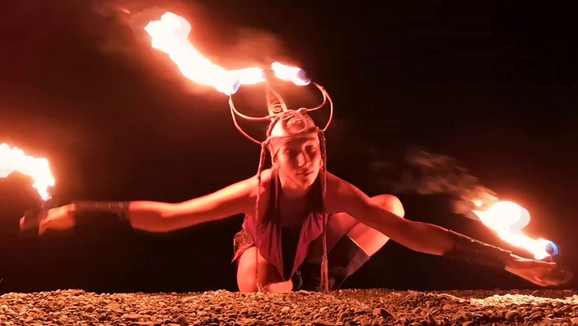
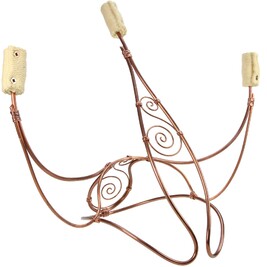
This equipment can be combined technically with other apparatus, such as body torches or the crown of fire, visible in the demonstration sequence below.
Security & Frequently Asked Questions
How to properly extinguish Kevlar wicks?
The wicks will extinguish naturally once the fuel has burned out. If you can still extinguish the flame with a sharp blow, the combustion is nearing its end. To extinguish the wick early during a performance, tightly wrap it in a thick, non-flammable fabric (such as a cotton towel) that has been slightly dampened . Avoid using soaking wet fabric: the water absorbed by the Kevlar will disrupt subsequent ignitions.
What can I do to maximize the lifespan of my equipment?
Never place burning equipment on the ground, especially on hard surfaces like concrete, stone, or metal. Thermal reflection will cause the equipment's temperature to rise critically and prematurely destroy the Kevlar through carbonization. Always keep the equipment moving or horizontal.
What precautions should I take with my clothes and hair?
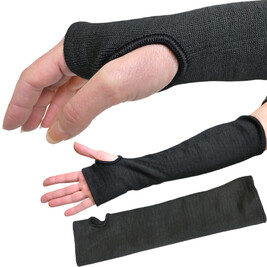
Your clothing is your first line of defense. Avoid loose-fitting garments and synthetic materials that melt against the skin. Opt for heavy cotton or leather. Tie back long hair, lightly dampen it if it's curly, and do not use any flammable hair products (such as hairspray). The use of Kevlar gloves or leather wristbands is strongly recommended.
How to manage excess fuel before ignition?
Never squeeze wicks with bare hands without rubber gloves. The standard approach is to firmly shake excess fuel away from the audience and the stage area. Ideally, use a spin-off bucket: this is environmentally friendly, prevents fuel waste, and eliminates the risk of projecting burning droplets around you.
What safety equipment should be available near the stage?
You (or your safety partner) must always have a thick, damp fire blanket and a foam fire extinguisher or bucket of water readily available. Caution: A powder or CO2 fire extinguisher should never be sprayed directly on a person. Only foam is suitable for this purpose.
How to breathe correctly while handling fire?
Fire consumes oxygen and produces soot/smoke. For experienced practitioners, breathing becomes a component of the flow: hold your breath when your hands and the wicks pass in line with your face (smoky areas), and take advantage of external movements or pivots to inhale the surrounding fresh air.
What should you do in case of a minor burn?
Immediately and thoroughly rinse the wound with cool running water. This is the only effective emergency medical treatment. Never apply ice or greasy substances. Once the wound is dry, aloe vera gel or calendula cream can be used to help the skin regenerate. In case of a severe burn, do not hesitate: contact emergency services.
Can you replace the wicks yourself?
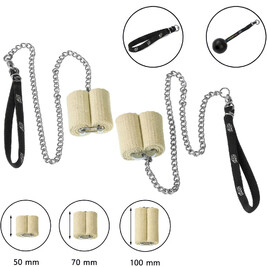
Yes. The assembly requires a woven Kevlar strip (25 mm wide). Folding and securing it are relatively simple. If you need technical advice when refurbishing your equipment, our team is available to assist you.

Hello, how long should the wicks soak in the kerdan before lighting?
Soak Kevlar wicks
Simply soak the wicks. Just dip them in the container and then take them out. Less than 5 seconds should be enough. It's pretty intuitive, just the time it takes for the wicks to soak up. The Kevlar used is made from para-aramids, it's blown, which gives it excellent absorbent properties. If the Kevlar is new, use it once or twice before your performance, to give the Kevlar time to "break in."
The price is for a pair?
What is the price?
Yes, the price is for a pair (we do not sell them individually).
The question was about the packaging. The price we quote is for a pair (2 fire hands). We do not sell them individually.
Good morning,
1: Which "wick" should I buy on your site to replace the one I used? Is it easy?
2: My show lasts 2 minutes, follow it up with another one after, how do you turn off your hands?
Do you have any explanations or recommendations for lighting?
Thank you!
1. I recommend the 25mm Kevlar wick, 3mm thick . This is a cathedral bend of the wick.
2. Use a damp cloth to extinguish your wicks before the flame goes out on its own (use a cloth made of a non-flammable material).
Hello. I would like to buy a pair but I would like to know how the CB ignition works and how long the pair lasts. Do you need fuel?
Fire hands have a "burn time" that varies slightly depending on your style.
If you practice with fast movements, you will have about 3 minutes of ignition time (this is less than with fire bolas for example, the wicks are indeed smaller). If you have a broader and softer style, you will have about 4 minutes of "ignition".
As fuel, dearomatized petroleum is generally used, which is also found under the trade name Kerdan.If you have any further questions or would like further advice, please do not hesitate to contact us directly by telephone (our number is at the top of the site).
Hello, how long is the stem please?
Not including the wick: 9cm. Including the wick: 12.5cm!