⚠️Mattress/rug order pricing information important !
Internships
Certified professional training in Juggling Therapy® – Become a Practitioner or Juggling Therapist® with Frédéric Robin
From 29 july 2026 to 29 july 2027

Juggling therapy
Price
Individual price : 600 € par module de 2 jours
Professional training (paid by employer or organization) : 750 € par module
Discover professional training in Juggling Therapy®, a unique certification program in France for professionals wishing to integrate juggling as a genuine therapeutic, educational, and cognitive development tool. Created by Frédéric Robin, this original method draws on traditional juggling techniques to support individuals in developing their potential by stimulating neuroplasticity, coordination, and metacognition.
This training is designed for professionals who have already participated in a Juggling Therapy® workshop and wish to deepen their practice in order to use this method with their own clients. Classes are intentionally small (1 to 3 participants maximum) to ensure fully personalized support. Each participant progresses at their own pace and benefits from instruction tailored to their level, experience, and professional goals.
Juggling Therapy® is a genuine therapeutic approach based on a precise sequencing of learning. Through juggling techniques, it allows for the simultaneous work on cognitive, motor, sensory, and emotional functions. This approach fosters awareness of one's abilities, identification of difficulties, and the development of strategies to overcome them. This work is part of a metacognition process, where each individual learns to understand their own functioning in order to sustainably improve their performance.
For over fifteen years, Frédéric Robin has been developing and refining this method for a very wide range of people: children, adults, seniors, autistic individuals, people with neurodevelopmental disorders, children with learning difficulties, minors under the jurisdiction of the courts, and people with disabilities. His field experience has allowed him to build a specific methodology whose results are now recognized and which is based on scientific knowledge concerning neuroplasticity and the brain's adaptive capacities.
The training pursues several educational objectives. Trainees learn to mobilize the learnings of Juggling Therapy® in order to promote the overall development of people, to develop a fine body awareness, to master therapeutic juggling techniques using different apparatus and to adopt the appropriate pedagogical approach to effectively transmit this method.
The educational objectives focus on the precise formulation of instructions, the selection of the most suitable equipment for each situation, adapting the sequencing of exercises to different skill levels, welcoming individuals experiencing difficulties, building students' confidence, and managing any physical issues encountered during the sessions. Particular attention is also paid to the choice of juggling equipment, an essential element for ensuring effective progress.
The course is organized around three levels, representing a total of six independent two-day modules. This structure allows professionals to progressively build their skills or to take only the modules that meet their needs.
Level 1 – Juggling Therapy Practitioner® focuses on the fundamentals of the method. The first module introduces six techniques using three scarves and two techniques with four scarves. Participants progressively work on alternating and crossing techniques to develop fine sensory awareness, build confidence, encourage perseverance, and create initial experiences of success.
The second module focuses on balance and dissociation between the upper and lower body. Trainees progressively learn to use six-wheeled and then three-wheeled training exercises, the Rolla Bolla, and various apparatus such as scarves, spinning plates, and the Kiwido. Upon completion of these first two modules, participants can obtain Level 1 Juggling Therapy Practitioner® certification, after successfully completing five case studies. This certification also allows them to work as assistants during Level 1 workshops and training courses.
Level 2 delves deeper into the mastery of various juggling props. Participants discover diabolo, spinning plates, the kendama, the Actrojack, juggling clubs, and cigar boxes. These tools become valuable observation aids, allowing instructors to identify students' difficulties while fostering confidence, perseverance, and success through tailored exercises.
The fourth module focuses on developing a sense of letting go using the devil stick, specifically the Golo, specially designed for beginners. Participants also explore kiwido to develop ambidexterity, coordination, alternating and cross-balancing movements, confidence building, supportive guidance, and balance. After successfully completing five new case studies, trainees receive Level 2 Juggling Therapy Practitioner® certification, enabling them to assist with Level 1 and 2 training.
The third level leads to the title of Jonglotherapist®. The fifth module offers in-depth work with balls, considered ten times more demanding than the previous exercises. Participants develop an even more refined body awareness by working on the sensation of letting go during the throw and the feeling of acceptance during the catch.
The sixth and final module focuses on working with clubs. This even more technical stage requires simultaneous mastery of throwing, rotating the objects, and managing their intrusion into the practitioner's personal space. This work allows participants to explore conscious fears and learn to overcome them. After presenting and validating five new case studies, participants receive Jonglothérapeute® certification, enabling them to assist in all of the school's training programs.
Beyond the technical aspects of juggling, this training develops numerous transferable skills applicable to professional practice. Participants improve their concentration, attention, memory, coordination, movement synchronization, peripheral vision, ambidexterity, decision-making skills, self-confidence, body awareness, and self-analysis abilities. The method is also recognized for its value in supporting individuals with learning disabilities (dyslexia, dyspraxia, dysgraphia, dyscalculia, etc.) through a playful, progressive, and motivating approach.
Training courses are offered on a registration basis, without a fixed annual schedule. Each module lasts two days and is organized according to demand and the school's availability. Interested professionals are invited to pre-register so they can be contacted to determine upcoming training dates and the most suitable course for their needs.
Accessible in a professional setting or as part of continuing education, this certification course is now a reference for all professionals wishing to integrate Juggling Therapy® into their daily practice and use juggling as a powerful tool for support, remediation, personal development and well-being.
This training is designed for professionals who have already participated in a Juggling Therapy® workshop and wish to deepen their practice in order to use this method with their own clients. Classes are intentionally small (1 to 3 participants maximum) to ensure fully personalized support. Each participant progresses at their own pace and benefits from instruction tailored to their level, experience, and professional goals.
Juggling Therapy® is a genuine therapeutic approach based on a precise sequencing of learning. Through juggling techniques, it allows for the simultaneous work on cognitive, motor, sensory, and emotional functions. This approach fosters awareness of one's abilities, identification of difficulties, and the development of strategies to overcome them. This work is part of a metacognition process, where each individual learns to understand their own functioning in order to sustainably improve their performance.
For over fifteen years, Frédéric Robin has been developing and refining this method for a very wide range of people: children, adults, seniors, autistic individuals, people with neurodevelopmental disorders, children with learning difficulties, minors under the jurisdiction of the courts, and people with disabilities. His field experience has allowed him to build a specific methodology whose results are now recognized and which is based on scientific knowledge concerning neuroplasticity and the brain's adaptive capacities.
The training pursues several educational objectives. Trainees learn to mobilize the learnings of Juggling Therapy® in order to promote the overall development of people, to develop a fine body awareness, to master therapeutic juggling techniques using different apparatus and to adopt the appropriate pedagogical approach to effectively transmit this method.
The educational objectives focus on the precise formulation of instructions, the selection of the most suitable equipment for each situation, adapting the sequencing of exercises to different skill levels, welcoming individuals experiencing difficulties, building students' confidence, and managing any physical issues encountered during the sessions. Particular attention is also paid to the choice of juggling equipment, an essential element for ensuring effective progress.
The course is organized around three levels, representing a total of six independent two-day modules. This structure allows professionals to progressively build their skills or to take only the modules that meet their needs.
Level 1 – Juggling Therapy Practitioner® focuses on the fundamentals of the method. The first module introduces six techniques using three scarves and two techniques with four scarves. Participants progressively work on alternating and crossing techniques to develop fine sensory awareness, build confidence, encourage perseverance, and create initial experiences of success.
The second module focuses on balance and dissociation between the upper and lower body. Trainees progressively learn to use six-wheeled and then three-wheeled training exercises, the Rolla Bolla, and various apparatus such as scarves, spinning plates, and the Kiwido. Upon completion of these first two modules, participants can obtain Level 1 Juggling Therapy Practitioner® certification, after successfully completing five case studies. This certification also allows them to work as assistants during Level 1 workshops and training courses.
Level 2 delves deeper into the mastery of various juggling props. Participants discover diabolo, spinning plates, the kendama, the Actrojack, juggling clubs, and cigar boxes. These tools become valuable observation aids, allowing instructors to identify students' difficulties while fostering confidence, perseverance, and success through tailored exercises.
The fourth module focuses on developing a sense of letting go using the devil stick, specifically the Golo, specially designed for beginners. Participants also explore kiwido to develop ambidexterity, coordination, alternating and cross-balancing movements, confidence building, supportive guidance, and balance. After successfully completing five new case studies, trainees receive Level 2 Juggling Therapy Practitioner® certification, enabling them to assist with Level 1 and 2 training.
The third level leads to the title of Jonglotherapist®. The fifth module offers in-depth work with balls, considered ten times more demanding than the previous exercises. Participants develop an even more refined body awareness by working on the sensation of letting go during the throw and the feeling of acceptance during the catch.
The sixth and final module focuses on working with clubs. This even more technical stage requires simultaneous mastery of throwing, rotating the objects, and managing their intrusion into the practitioner's personal space. This work allows participants to explore conscious fears and learn to overcome them. After presenting and validating five new case studies, participants receive Jonglothérapeute® certification, enabling them to assist in all of the school's training programs.
Beyond the technical aspects of juggling, this training develops numerous transferable skills applicable to professional practice. Participants improve their concentration, attention, memory, coordination, movement synchronization, peripheral vision, ambidexterity, decision-making skills, self-confidence, body awareness, and self-analysis abilities. The method is also recognized for its value in supporting individuals with learning disabilities (dyslexia, dyspraxia, dysgraphia, dyscalculia, etc.) through a playful, progressive, and motivating approach.
Training courses are offered on a registration basis, without a fixed annual schedule. Each module lasts two days and is organized according to demand and the school's availability. Interested professionals are invited to pre-register so they can be contacted to determine upcoming training dates and the most suitable course for their needs.
Accessible in a professional setting or as part of continuing education, this certification course is now a reference for all professionals wishing to integrate Juggling Therapy® into their daily practice and use juggling as a powerful tool for support, remediation, personal development and well-being.


3€00
2€00
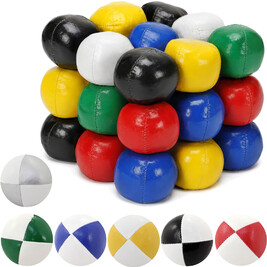
Softball 70 or 120g
The best-selling toy for beginners! Doesn't roll away, soft to the touch, easy to grasp. Perfect for developing motor skills and confidence.
2€50
2€00
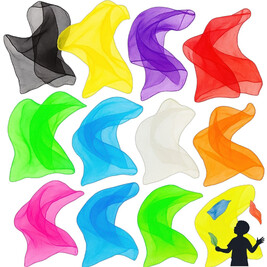
NetJuggler Juggling Scarf
Ideal for children aged 4 and up to discover the sport. Slow flight: understanding rhythm and developing coordination.
4€00
3€00
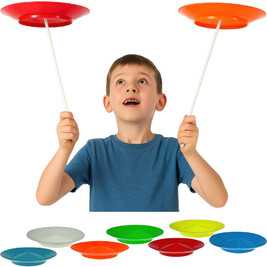
Soft Chinese plate + chopsticks
Essential for beginners! Made of unbreakable, flexible plastic, ideal for success and confidence. Perfect for schools.

4€00
3€20
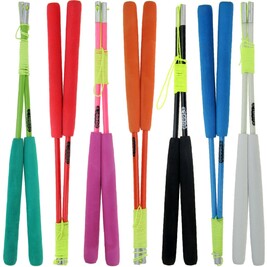
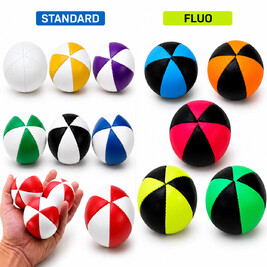
Star beanbag
Ergonomic 6-panel design for a better grip. Robust, ideal for all levels and for developing dexterity.
24€50
18€50
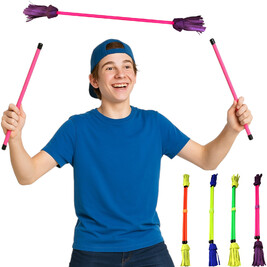
NEO flower stick set
Full silicone grip for a perfect hold. The complete kit for learning safely and without slipping.