⚠️Mattress/rug order pricing information important !
Others
Grand Flying Trapeze Certification Training 2027 – Techniques and interpretation of the arts of the Grand Flying Trapeze at the CIAM in Aix-en-Provence
From 20 july 2026 at 09:30 to 01 hanuary 2027
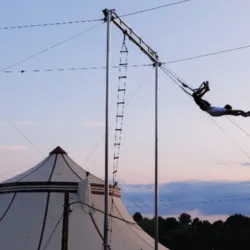
Grand Flying Trapeze Certification Training 2027
Auditions 2026 Le 20 july 2026 at 09:30
Auditions 2026 Le 28 august 2026 at 14:30
Auditions 2026 Le 16 september 2026 at 14:30
Auditions 2026 Le 10 october 2026 at 13:30
Le 01 hanuary 2027
Price
Full route : 13 570€
Certified Flying Trapeze Artist Training at CIAM: Become a professional Flying Trapeze artist in Aix-en-Provence
The International Centre for Movement Arts (CIAM) offers a professional certification course in Techniques and interpretation of the arts of the Grand Flying Trapeze, an intensive course for artists wishing to pursue a career in one of the most spectacular and demanding disciplines of circus arts.
Held at the exceptional CIAM site in Aix-en-Provence, this training program offers a true professional development pathway, combining technical skills, artistic creation, safety, stage performance, and teamwork. Led by a team of internationally renowned educators and artists, it prepares future professionals for the demands of major companies and contemporary and traditional circus productions.
The program is led by Jan Van Zyl, a world-renowned specialist in the Flying Trapeze, who has been sharing his expertise at CIAM for nearly ten years after more than forty years of experience in major international circuses. He is assisted by Karen Richard, educational coordinator and aerial artist, as well as a team of specialists in the fields of live performance, artistic creation, physical conditioning, sound, lighting, and nutrition.
This training leads to a professional certification (RS7577) currently being renewed with the Specific Directory of Certifications and Authorizations (RSCH) of France Compétences.
An exceptional discipline
The Flying Trapeze is considered one of the most technical disciplines in circus arts. It requires perfect control of the body in space, great precision of execution, significant physical preparation, and absolute trust between partners.
The work of the base, the flyer and the entire team requires constant coordination, excellent knowledge of safety rules and an ability to interpret each movement artistically.
CIAM training allows you to acquire all these skills in a professional and secure environment.
A complete professional development path
The training represents 355 hours spread over 18 weeks, at an intensive pace from Monday morning to Friday evening.
The curriculum is organized into two main complementary periods.
The first part, lasting 110 hours (approximately five weeks), is dedicated to acquiring technical autonomy and fundamental safety skills. Trainees learn the essential basics of the discipline, refine their aerial techniques, and develop the automatic responses necessary for working at height.
The second period comprises 255 hours (approximately twelve weeks). It is entirely dedicated to artistic and technical development. Participants delve deeper into the techniques of the Flying Trapeze, develop their stage presence, explore the theoretical aspects of the discipline, artistic creation, performance preparation, and mastery of the professional requirements of the profession.
At the end of the training, the skills acquired are assessed before a jury composed of professionals in the sector, an essential condition for obtaining certification.
Ambitious educational objectives
Throughout the program, participants develop numerous professional skills, including:
perfect their practice of the Grand Flying Trapeze;
mastering advanced techniques in aerial disciplines;
strengthen their technical autonomy;
to play a role in a professional show;
incorporate the specific safety rules for the Grand Volant;
understand the working conditions in live entertainment;
to develop their ability to thrive in an artistic team;
to build a truly professional approach.
A training program designed for artists already engaged in their practice
This training is primarily intended for:
carriers;
acrobats;
flying trapeze artists;
aerial frame artists;
Korean frame artists;
acrobats;
trampolinists;
gymnasts;
artists wishing to develop towards a professional career in the flying arts.
Courses can be taught in French as well as English, allowing for the enrollment of international candidates.
Admission requirements
Access to training is a multi-step process:
submission of an application file;
audition at CIAM;
technical level assessment;
possible interview with the teaching team.
Candidates must possess:
a first experience of the flying trapeze or aerial disciplines;
solid acrobatic foundations (gymnastics, trampoline or equivalent disciplines).
The course can be individualized according to the entry level.
Artists who are already very experienced can join a tailored 255-hour course, after validation during the audition.
Auditions
Auditions for the 2027 session are being held directly at CIAM:
Monday, July 20, 2026 at 9:30 a.m.;
Friday, August 28, 2026 at 2:30 p.m.;
Wednesday, September 16, 2026 at 2:30 p.m.;
Saturday, October 10, 2026 at 1:30 p.m.
Supervision provided by international specialists
The artistic and educational direction is provided by Jan Van Zyl, a South African artist considered one of the world's leading specialists in the Grand Flying Trapeze.
A rare acrobat of his generation to have performed a triple jump in a performance, he worked for over thirty years in prestigious establishments such as:
Circus Krone;
Royal Circus of Brussels;
Boswell Wilkie Circus;
Bennewies Circus;
Blackpool Tower Circus;
Mundo Show;
Circo Americano.
Alongside him, Karen Richard, an engineer by training, aerial artist and holder of the BPJEPS Circus Activities qualification, provides educational coordination and support for trainees.
The training also benefits from numerous workshops led by guest artists and specialists.
Recent speakers include:
Amélie Kourim;
Jean-Michel Poitreau;
Elisa Alcalde;
Didier Kardous;
Richard Gil;
Maxime Bourdon;
Fabrice Pardo;
Julie Yousef;
Benoît Belleville;
Cécile Cinelli.
Unique infrastructure in Europe
The trainees work in an environment entirely dedicated to circus arts, located on a five-hectare pine forest, just a few minutes from the city center of Aix-en-Provence.
CIAM notably provides:
an internal structure of the Grand Flying Trapeze;
an external structure of Grand Flying Trapeze;
a mini steering wheel designed for gradual learning;
a large trampoline;
several fixed trapezoids;
safety lanyard systems;
different training areas;
a fully equipped weight room;
the VOGOSCOPE Vista (VOGO) system enabling live and replay multi-camera video analysis to improve technical progress.
Training results
The figures provided by CIAM for the 2025 cohort demonstrate the quality of the support provided:
83% success rate in certification;
90% trainee satisfaction;
10 trained professional artists.
Funding
CIAM is registered with AFDAS, allowing, depending on the candidates' situation, for support from skills operators.
The establishment is also Qualiopi certified, attesting to the quality of its professional training actions (renewal currently in progress).
Accessibility
The training can be adapted to accommodate people with disabilities.
For any accessibility-related requests, candidates can contact Karen Richard, CIAM's disability liaison officer, directly.
This training program offers a unique opportunity to join a top-tier curriculum entirely dedicated to the Flying Trapeze. Through intensive instruction, state-of-the-art professional facilities, and guidance from internationally renowned specialists, CIAM provides artists with all the technical, artistic, and interpersonal skills necessary to enter the professional world of aerial circus and pursue a career with leading national and international companies.
The International Centre for Movement Arts (CIAM) offers a professional certification course in Techniques and interpretation of the arts of the Grand Flying Trapeze, an intensive course for artists wishing to pursue a career in one of the most spectacular and demanding disciplines of circus arts.
Held at the exceptional CIAM site in Aix-en-Provence, this training program offers a true professional development pathway, combining technical skills, artistic creation, safety, stage performance, and teamwork. Led by a team of internationally renowned educators and artists, it prepares future professionals for the demands of major companies and contemporary and traditional circus productions.
The program is led by Jan Van Zyl, a world-renowned specialist in the Flying Trapeze, who has been sharing his expertise at CIAM for nearly ten years after more than forty years of experience in major international circuses. He is assisted by Karen Richard, educational coordinator and aerial artist, as well as a team of specialists in the fields of live performance, artistic creation, physical conditioning, sound, lighting, and nutrition.
This training leads to a professional certification (RS7577) currently being renewed with the Specific Directory of Certifications and Authorizations (RSCH) of France Compétences.
An exceptional discipline
The Flying Trapeze is considered one of the most technical disciplines in circus arts. It requires perfect control of the body in space, great precision of execution, significant physical preparation, and absolute trust between partners.
The work of the base, the flyer and the entire team requires constant coordination, excellent knowledge of safety rules and an ability to interpret each movement artistically.
CIAM training allows you to acquire all these skills in a professional and secure environment.
A complete professional development path
The training represents 355 hours spread over 18 weeks, at an intensive pace from Monday morning to Friday evening.
The curriculum is organized into two main complementary periods.
The first part, lasting 110 hours (approximately five weeks), is dedicated to acquiring technical autonomy and fundamental safety skills. Trainees learn the essential basics of the discipline, refine their aerial techniques, and develop the automatic responses necessary for working at height.
The second period comprises 255 hours (approximately twelve weeks). It is entirely dedicated to artistic and technical development. Participants delve deeper into the techniques of the Flying Trapeze, develop their stage presence, explore the theoretical aspects of the discipline, artistic creation, performance preparation, and mastery of the professional requirements of the profession.
At the end of the training, the skills acquired are assessed before a jury composed of professionals in the sector, an essential condition for obtaining certification.
Ambitious educational objectives
Throughout the program, participants develop numerous professional skills, including:
perfect their practice of the Grand Flying Trapeze;
mastering advanced techniques in aerial disciplines;
strengthen their technical autonomy;
to play a role in a professional show;
incorporate the specific safety rules for the Grand Volant;
understand the working conditions in live entertainment;
to develop their ability to thrive in an artistic team;
to build a truly professional approach.
A training program designed for artists already engaged in their practice
This training is primarily intended for:
carriers;
acrobats;
flying trapeze artists;
aerial frame artists;
Korean frame artists;
acrobats;
trampolinists;
gymnasts;
artists wishing to develop towards a professional career in the flying arts.
Courses can be taught in French as well as English, allowing for the enrollment of international candidates.
Admission requirements
Access to training is a multi-step process:
submission of an application file;
audition at CIAM;
technical level assessment;
possible interview with the teaching team.
Candidates must possess:
a first experience of the flying trapeze or aerial disciplines;
solid acrobatic foundations (gymnastics, trampoline or equivalent disciplines).
The course can be individualized according to the entry level.
Artists who are already very experienced can join a tailored 255-hour course, after validation during the audition.
Auditions
Auditions for the 2027 session are being held directly at CIAM:
Monday, July 20, 2026 at 9:30 a.m.;
Friday, August 28, 2026 at 2:30 p.m.;
Wednesday, September 16, 2026 at 2:30 p.m.;
Saturday, October 10, 2026 at 1:30 p.m.
Supervision provided by international specialists
The artistic and educational direction is provided by Jan Van Zyl, a South African artist considered one of the world's leading specialists in the Grand Flying Trapeze.
A rare acrobat of his generation to have performed a triple jump in a performance, he worked for over thirty years in prestigious establishments such as:
Circus Krone;
Royal Circus of Brussels;
Boswell Wilkie Circus;
Bennewies Circus;
Blackpool Tower Circus;
Mundo Show;
Circo Americano.
Alongside him, Karen Richard, an engineer by training, aerial artist and holder of the BPJEPS Circus Activities qualification, provides educational coordination and support for trainees.
The training also benefits from numerous workshops led by guest artists and specialists.
Recent speakers include:
Amélie Kourim;
Jean-Michel Poitreau;
Elisa Alcalde;
Didier Kardous;
Richard Gil;
Maxime Bourdon;
Fabrice Pardo;
Julie Yousef;
Benoît Belleville;
Cécile Cinelli.
Unique infrastructure in Europe
The trainees work in an environment entirely dedicated to circus arts, located on a five-hectare pine forest, just a few minutes from the city center of Aix-en-Provence.
CIAM notably provides:
an internal structure of the Grand Flying Trapeze;
an external structure of Grand Flying Trapeze;
a mini steering wheel designed for gradual learning;
a large trampoline;
several fixed trapezoids;
safety lanyard systems;
different training areas;
a fully equipped weight room;
the VOGOSCOPE Vista (VOGO) system enabling live and replay multi-camera video analysis to improve technical progress.
Training results
The figures provided by CIAM for the 2025 cohort demonstrate the quality of the support provided:
83% success rate in certification;
90% trainee satisfaction;
10 trained professional artists.
Funding
CIAM is registered with AFDAS, allowing, depending on the candidates' situation, for support from skills operators.
The establishment is also Qualiopi certified, attesting to the quality of its professional training actions (renewal currently in progress).
Accessibility
The training can be adapted to accommodate people with disabilities.
For any accessibility-related requests, candidates can contact Karen Richard, CIAM's disability liaison officer, directly.
This training program offers a unique opportunity to join a top-tier curriculum entirely dedicated to the Flying Trapeze. Through intensive instruction, state-of-the-art professional facilities, and guidance from internationally renowned specialists, CIAM provides artists with all the technical, artistic, and interpersonal skills necessary to enter the professional world of aerial circus and pursue a career with leading national and international companies.


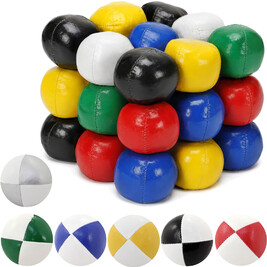
3€00
2€00
Softball 70 or 120g
The best-selling toy for beginners! Doesn't roll away, soft to the touch, easy to grasp. Perfect for developing motor skills and confidence.
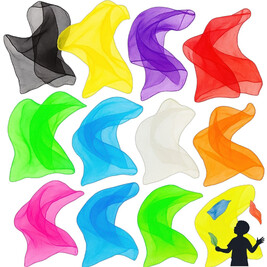
2€50
2€00
NetJuggler Juggling Scarf
Ideal for children aged 4 and up to discover the sport. Slow flight: understanding rhythm and developing coordination.
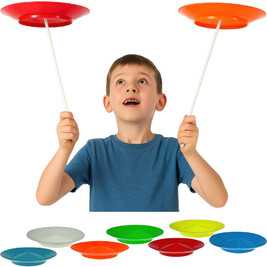
4€00
3€00
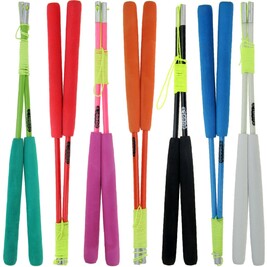
Soft Chinese plate + chopsticks
Essential for beginners! Made of unbreakable, flexible plastic, ideal for success and confidence. Perfect for schools.

4€00
3€20
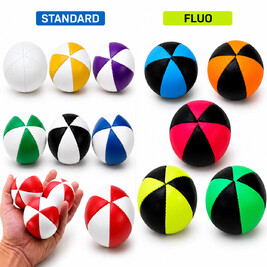
Star beanbag
Ergonomic 6-panel design for a better grip. Robust, ideal for all levels and for developing dexterity.
24€50
18€50
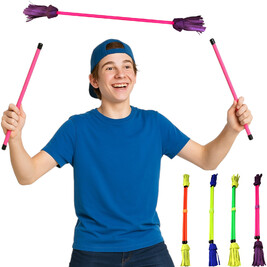
NEO flower stick set
Full silicone grip for a perfect hold. The complete kit for learning safely and without slipping.