⚠️Mattress/rug order pricing information important !
Others
Preparatory course for higher education in circus arts 2027 – Bordeaux Circus School
From 01 september 2027 to 01 july 2029
'Bordeaux Circus School'
École de Cirque de Bordeaux
286 boulevard Alfred Daney
33300 Bordeaux
286 boulevard Alfred Daney
33300 Bordeaux
France
Price
Auditions : 50€
Case study : 20€
Outstanding costs : 540,30 € TTC par an
Making a career in circus arts requires much more than mastering a technical discipline. It involves developing an artistic identity, learning to work as part of a team, understanding the realities of live performance, and achieving complete autonomy in daily practice. This is precisely the aim of the Preparatory Program for Higher Circus Arts Schools offered by the Bordeaux Circus School, an intensive two-year course specifically designed to prepare young artists for entrance exams to French and European higher education institutions while allowing them to build a solid foundation for a future professional career.
For several years, this preparatory class has supported circus performers aspiring to enter leading circus arts institutions. The educational approach is based on a core principle: each student possesses their own unique artistic potential. The training therefore does not aim to produce identical artists, but rather to guide each student in discovering their personality, their stage presence, and their way of inhabiting the ring. As Claude Saint-Dizier, director of the Bordeaux Circus School, summarizes, learning comes as much from experimentation as from technical mastery. Students are encouraged to explore, try, make mistakes, start again, push beyond their comfort zones, and embrace uncertainty in order to allow a truly unique artistic voice to emerge. This pedagogical philosophy permeates the entire program and is one of the school's defining characteristics.
Unlike training focused solely on physical performance, the Bordeaux Circus School places the individual at the heart of its teaching. Each student benefits from personalized guidance provided by a team of teaching artists from diverse backgrounds. Several instructors may teach the same discipline, allowing students to be exposed to different technical and artistic approaches. This pedagogical diversity enables them to develop their own critical perspective and progressively enrich their practice rather than simply reproducing a single model. The school also hosts resident artistic companies that regularly share their creative methods and offer research workshops in which students can participate. This close interaction with professional artists fosters critical thinking, opens new perspectives, and allows future circus performers to experience the realities of the profession firsthand.
The program welcomes young artists aged 18 to 24 who already possess a proven track record in circus arts. Candidates can apply in various specialties, including aerial disciplines (fixed trapeze, dance trapeze, aerial silks, rope, aerial hoop, or straps), juggling and object manipulation, Chinese pole, balancing acts, acrobatic lifts, ground acrobatics, and acrodance. The goal is not to teach a discipline from scratch, but rather to enable each candidate to reach a sufficient technical and artistic level to succeed in auditions for higher education institutions and pursue a professional career in the performing arts.
The program comprises 1,821 hours of training spread over two years, or approximately 910 hours per year. Classes are generally held Monday through Friday between 9:00 a.m. and 5:00 p.m., from mid-September to the end of June, with school holidays following the Zone A calendar. Depending on educational or artistic projects, some weekends and public holidays may also be required. This schedule replicates the rhythm of a real professional environment and allows students to develop essential work habits for circus professions. Attendance is mandatory throughout the program, and all absences must be justified to the administration.
The entire training program is structured around six major complementary modules that evolve simultaneously over the two years. Each one addresses a specific objective while working in conjunction with the others to progressively build a well-rounded artist, capable of combining technical excellence, creativity, autonomy, artistic culture, and safety.
The first module, entitled "Being Autonomous in Preparing Your Body," forms the foundation of the entire curriculum. The Bordeaux Circus School considers the body to be the artist's primary tool. Students therefore learn to understand their bodies better in order to care for them throughout their careers. The curriculum covers the fundamentals of anatomy, physiology, nutrition, and physical conditioning. Students discover how to create an effective warm-up, organize their recovery after exertion, prevent injuries, and sustainably develop their physical abilities. They work on general fitness, strength development, muscle mass, muscle control, mobility, joint stability, and various methods for progressively improving their performance without compromising their health. This module aims to make each future artist completely autonomous in managing their daily physical preparation, an essential skill when joining a company or pursuing higher education.
The second module, "Developing Your Discipline," represents the core of the circus arts specialization. Students dedicate a significant portion of their time to deepening their understanding of their chosen apparatus or primary discipline while developing a robust work methodology. The objective extends far beyond simple technical repetition. Students learn to analyze their practice, understand the biomechanical workings of their discipline, identify different technical families, create appropriate exercise sequences, adhere to the safety regulations specific to their apparatus, and organize their training sessions independently. They progressively develop their ability to define objectives, manage their time, plan their personal research, and construct a coherent progression. The training also encourages them to reflect on the link between technique and artistic expression, so that their specialty becomes a true means of expression rather than a mere succession of figures. Interpretation, personal creation, the pursuit of individuality, and professional conduct are thus given as much importance as the physical performance itself.
The third module, "Strengthening the Fundamentals," significantly expands the skills of future artists by offering them cross-disciplinary work encompassing dance, acting, acrobatics, balance, and trampoline. For the Bordeaux Circus School, a circus artist cannot be limited to mastering their apparatus: they must also be able to tell a story, inhabit a space, improvise, interact with a stage partner, and convey emotions to the audience. This is why this module plays a crucial role in the curriculum.
Students explore dance movement in all its forms. They learn to play with time, rhythm, music, silence, support, and body weight. They develop different movement qualities, working on range of motion, spinal mobility, steps, turns, jumps, choreographic improvisation, and their ability to express their own unique physical language. The goal is not to train dancers, but to allow each student to enrich their gestural vocabulary to enhance their circus practice.
Theatrical work also plays a significant role. Students discover the fundamentals of stagecraft, learn to build stage presence, develop their listening skills, work on their relationship with the audience and their fellow students, improvise, and use their breath, voice, and, when necessary, the text. They are regularly presented with creative situations where they must invent, propose, experiment, and defend their artistic choices before other students and instructors. These exercises gradually allow them to move beyond mere technical execution and develop a genuine stage presence.
In parallel, acrobatic fundamentals are reinforced throughout the training. Students refine their basic skills in floor acrobatics, trampoline, and balances to gain a deeper understanding of movement. They work on biomechanics, different axes of rotation, coordination, positioning, acrobatic families, precision of movement, and the anticipation of complex movements. This continuous progression allows them to approach their chosen specialty with greater mastery, fluidity, and safety. All of this learning contributes to developing versatile artists, capable of evolving in very different artistic environments and meeting the demands of both higher education institutions and professional companies.
The fourth module, "Expressing One's Artistic and Technical Personality," gradually represents the culmination of all the work done since the beginning of the program. After consolidating their physical, technical, and artistic foundations, students are invited to develop a truly personal proposal. The goal is to transform the acquired skills into a coherent artistic project capable of convincing the juries of higher education institutions.
Throughout this module, students develop their improvisation skills on their apparatus, explore different creative avenues, and gradually compose their own act. They learn to structure an artistic proposal, to articulate technique and interpretation, to assert a stage identity, and to make deliberate aesthetic choices. The instructors guide each student in this process so that the presented act truly reflects their personality rather than being a mere demonstration exercise.
Preparation for competitions also plays a significant role. Prospective candidates create their artistic portfolios, learn to present their backgrounds, write the documents required by higher education institutions, and produce the videos necessary for the various pre-selection stages. This administrative and artistic work is integrated into the curriculum so that students arrive at the competitions with high-quality materials and a thorough understanding of the juries' expectations. The students' work is regularly presented in public showcases, giving them the opportunity to experience performing for an audience, manage stage fright, refine their proposals, and gain confidence before the official auditions.
The fifth module, "Envisioning and Positioning Oneself in a Professional Environment," allows students to discover the many facets of the circus artist's profession. The Bordeaux Circus School believes that a future professional must master far more than just their technical skills. Students develop a genuine artistic culture by attending numerous performances each year as part of the Spectator's Journey program. Approximately twenty performances are selected by the administration to expose students to a wide variety of aesthetics, circus forms, dance performances, theater, and contemporary creations. Each outing leads to analysis, discussions, and written reports that help refine the critical eye of these future artists.
The program also offers opportunities to meet with directors, choreographers, and companies, as well as screenings of films and courses dedicated to art history and the evolution of live performance. Students gradually discover the administrative and legal aspects of their future profession: the workings of intermittent employment, performance contracts, production rights, labor law, company organization, the institutional environment, and the economic realities of the cultural sector. The goal is to enable them to confidently approach their future professional integration, whether within a company, as a freelance artist, or by pursuing further studies. This module also helps each student refine their artistic project and better understand the role they wish to play in the live performance landscape.
The sixth and final module, "Being able to assess the needs for safe movement on one's apparatus," emphasizes that no circus practice can be separated from safety. Throughout their training, students learn to identify the risks associated with their discipline and implement appropriate solutions to work in optimal conditions. They study safety rules, different rigging systems, knots used in aerial installations, the characteristics of lifting equipment, load calculations, suitability plans, and the writing of professional technical specifications. This approach allows them to gradually become autonomous in the technical preparation of their acts while ensuring the safety of the artists, technicians, and audience. The school also offers the opportunity to prepare for Working at Heights certification during the second year, a skill particularly valued in the live entertainment sector.
For several years, this preparatory class has supported circus performers aspiring to enter leading circus arts institutions. The educational approach is based on a core principle: each student possesses their own unique artistic potential. The training therefore does not aim to produce identical artists, but rather to guide each student in discovering their personality, their stage presence, and their way of inhabiting the ring. As Claude Saint-Dizier, director of the Bordeaux Circus School, summarizes, learning comes as much from experimentation as from technical mastery. Students are encouraged to explore, try, make mistakes, start again, push beyond their comfort zones, and embrace uncertainty in order to allow a truly unique artistic voice to emerge. This pedagogical philosophy permeates the entire program and is one of the school's defining characteristics.
Unlike training focused solely on physical performance, the Bordeaux Circus School places the individual at the heart of its teaching. Each student benefits from personalized guidance provided by a team of teaching artists from diverse backgrounds. Several instructors may teach the same discipline, allowing students to be exposed to different technical and artistic approaches. This pedagogical diversity enables them to develop their own critical perspective and progressively enrich their practice rather than simply reproducing a single model. The school also hosts resident artistic companies that regularly share their creative methods and offer research workshops in which students can participate. This close interaction with professional artists fosters critical thinking, opens new perspectives, and allows future circus performers to experience the realities of the profession firsthand.
The program welcomes young artists aged 18 to 24 who already possess a proven track record in circus arts. Candidates can apply in various specialties, including aerial disciplines (fixed trapeze, dance trapeze, aerial silks, rope, aerial hoop, or straps), juggling and object manipulation, Chinese pole, balancing acts, acrobatic lifts, ground acrobatics, and acrodance. The goal is not to teach a discipline from scratch, but rather to enable each candidate to reach a sufficient technical and artistic level to succeed in auditions for higher education institutions and pursue a professional career in the performing arts.
The program comprises 1,821 hours of training spread over two years, or approximately 910 hours per year. Classes are generally held Monday through Friday between 9:00 a.m. and 5:00 p.m., from mid-September to the end of June, with school holidays following the Zone A calendar. Depending on educational or artistic projects, some weekends and public holidays may also be required. This schedule replicates the rhythm of a real professional environment and allows students to develop essential work habits for circus professions. Attendance is mandatory throughout the program, and all absences must be justified to the administration.
The entire training program is structured around six major complementary modules that evolve simultaneously over the two years. Each one addresses a specific objective while working in conjunction with the others to progressively build a well-rounded artist, capable of combining technical excellence, creativity, autonomy, artistic culture, and safety.
The first module, entitled "Being Autonomous in Preparing Your Body," forms the foundation of the entire curriculum. The Bordeaux Circus School considers the body to be the artist's primary tool. Students therefore learn to understand their bodies better in order to care for them throughout their careers. The curriculum covers the fundamentals of anatomy, physiology, nutrition, and physical conditioning. Students discover how to create an effective warm-up, organize their recovery after exertion, prevent injuries, and sustainably develop their physical abilities. They work on general fitness, strength development, muscle mass, muscle control, mobility, joint stability, and various methods for progressively improving their performance without compromising their health. This module aims to make each future artist completely autonomous in managing their daily physical preparation, an essential skill when joining a company or pursuing higher education.
The second module, "Developing Your Discipline," represents the core of the circus arts specialization. Students dedicate a significant portion of their time to deepening their understanding of their chosen apparatus or primary discipline while developing a robust work methodology. The objective extends far beyond simple technical repetition. Students learn to analyze their practice, understand the biomechanical workings of their discipline, identify different technical families, create appropriate exercise sequences, adhere to the safety regulations specific to their apparatus, and organize their training sessions independently. They progressively develop their ability to define objectives, manage their time, plan their personal research, and construct a coherent progression. The training also encourages them to reflect on the link between technique and artistic expression, so that their specialty becomes a true means of expression rather than a mere succession of figures. Interpretation, personal creation, the pursuit of individuality, and professional conduct are thus given as much importance as the physical performance itself.
The third module, "Strengthening the Fundamentals," significantly expands the skills of future artists by offering them cross-disciplinary work encompassing dance, acting, acrobatics, balance, and trampoline. For the Bordeaux Circus School, a circus artist cannot be limited to mastering their apparatus: they must also be able to tell a story, inhabit a space, improvise, interact with a stage partner, and convey emotions to the audience. This is why this module plays a crucial role in the curriculum.
Students explore dance movement in all its forms. They learn to play with time, rhythm, music, silence, support, and body weight. They develop different movement qualities, working on range of motion, spinal mobility, steps, turns, jumps, choreographic improvisation, and their ability to express their own unique physical language. The goal is not to train dancers, but to allow each student to enrich their gestural vocabulary to enhance their circus practice.
Theatrical work also plays a significant role. Students discover the fundamentals of stagecraft, learn to build stage presence, develop their listening skills, work on their relationship with the audience and their fellow students, improvise, and use their breath, voice, and, when necessary, the text. They are regularly presented with creative situations where they must invent, propose, experiment, and defend their artistic choices before other students and instructors. These exercises gradually allow them to move beyond mere technical execution and develop a genuine stage presence.
In parallel, acrobatic fundamentals are reinforced throughout the training. Students refine their basic skills in floor acrobatics, trampoline, and balances to gain a deeper understanding of movement. They work on biomechanics, different axes of rotation, coordination, positioning, acrobatic families, precision of movement, and the anticipation of complex movements. This continuous progression allows them to approach their chosen specialty with greater mastery, fluidity, and safety. All of this learning contributes to developing versatile artists, capable of evolving in very different artistic environments and meeting the demands of both higher education institutions and professional companies.
The fourth module, "Expressing One's Artistic and Technical Personality," gradually represents the culmination of all the work done since the beginning of the program. After consolidating their physical, technical, and artistic foundations, students are invited to develop a truly personal proposal. The goal is to transform the acquired skills into a coherent artistic project capable of convincing the juries of higher education institutions.
Throughout this module, students develop their improvisation skills on their apparatus, explore different creative avenues, and gradually compose their own act. They learn to structure an artistic proposal, to articulate technique and interpretation, to assert a stage identity, and to make deliberate aesthetic choices. The instructors guide each student in this process so that the presented act truly reflects their personality rather than being a mere demonstration exercise.
Preparation for competitions also plays a significant role. Prospective candidates create their artistic portfolios, learn to present their backgrounds, write the documents required by higher education institutions, and produce the videos necessary for the various pre-selection stages. This administrative and artistic work is integrated into the curriculum so that students arrive at the competitions with high-quality materials and a thorough understanding of the juries' expectations. The students' work is regularly presented in public showcases, giving them the opportunity to experience performing for an audience, manage stage fright, refine their proposals, and gain confidence before the official auditions.
The fifth module, "Envisioning and Positioning Oneself in a Professional Environment," allows students to discover the many facets of the circus artist's profession. The Bordeaux Circus School believes that a future professional must master far more than just their technical skills. Students develop a genuine artistic culture by attending numerous performances each year as part of the Spectator's Journey program. Approximately twenty performances are selected by the administration to expose students to a wide variety of aesthetics, circus forms, dance performances, theater, and contemporary creations. Each outing leads to analysis, discussions, and written reports that help refine the critical eye of these future artists.
The program also offers opportunities to meet with directors, choreographers, and companies, as well as screenings of films and courses dedicated to art history and the evolution of live performance. Students gradually discover the administrative and legal aspects of their future profession: the workings of intermittent employment, performance contracts, production rights, labor law, company organization, the institutional environment, and the economic realities of the cultural sector. The goal is to enable them to confidently approach their future professional integration, whether within a company, as a freelance artist, or by pursuing further studies. This module also helps each student refine their artistic project and better understand the role they wish to play in the live performance landscape.
The sixth and final module, "Being able to assess the needs for safe movement on one's apparatus," emphasizes that no circus practice can be separated from safety. Throughout their training, students learn to identify the risks associated with their discipline and implement appropriate solutions to work in optimal conditions. They study safety rules, different rigging systems, knots used in aerial installations, the characteristics of lifting equipment, load calculations, suitability plans, and the writing of professional technical specifications. This approach allows them to gradually become autonomous in the technical preparation of their acts while ensuring the safety of the artists, technicians, and audience. The school also offers the opportunity to prepare for Working at Heights certification during the second year, a skill particularly valued in the live entertainment sector.
3€00
2€00
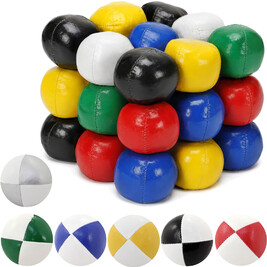
Softball 70 or 120g
The best-selling toy for beginners! Doesn't roll away, soft to the touch, easy to grasp. Perfect for developing motor skills and confidence.
2€50
2€00
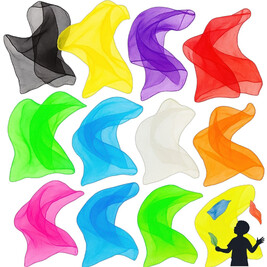
NetJuggler Juggling Scarf
Ideal for children aged 4 and up to discover the sport. Slow flight: understanding rhythm and developing coordination.
4€00
3€00
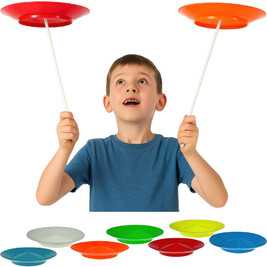
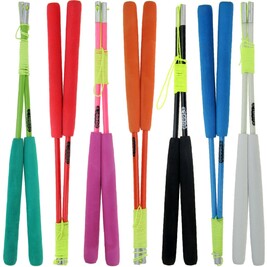
Soft Chinese plate + chopsticks
Essential for beginners! Made of unbreakable, flexible plastic, ideal for success and confidence. Perfect for schools.

4€00
3€20
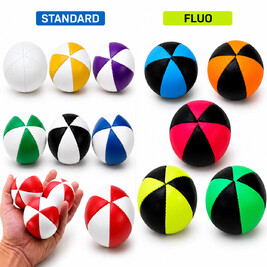
Star beanbag
Ergonomic 6-panel design for a better grip. Robust, ideal for all levels and for developing dexterity.
24€50
18€50
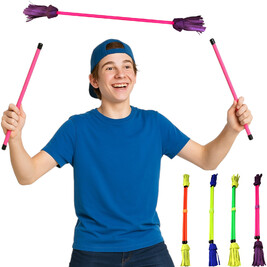
NEO flower stick set
Full silicone grip for a perfect hold. The complete kit for learning safely and without slipping.