⚠️Mattress/rug order pricing information important !
Others
Professional training – Preparation for the prerequisites of the TIAC (Circus Arts Instructor Qualification)
From 01 september to 05 december 2026
TIAC
Basic module From 01 september to 16 october 2026
From 01 september to 05 december 2026
Intensive modules (optional) From 07 to 08 november 2026
Module 1 – Acrobatics
Intensive modules (optional) From 14 to 15 november 2026
Module 2 – Balancing on Objects / Juggling
Intensive modules (optional) From 21 to 22 november 2026
Module 3 – Aerial
Intensive modules (optional) From 04 to 05 december 2026
Module 4 – Balancing on Objects / Juggling
La Grainerie – Fabrique des arts du cirque et de l'itinérance
Patio 2
61 rue Saint-Jean
31130 Balma (Toulouse Métropole)
Patio 2
61 rue Saint-Jean
31130 Balma (Toulouse Métropole)
France
Price
Basic module : 1680 €
Intensive modules : 210 € par module
Complete training : 2 520 €
The preparatory course for the TIAC (Title of Circus Arts Instructor – RNCP n°37742) offered by Par Haz'Art – Toulouse Circus School is designed for individuals wishing to become circus arts instructors and subsequently enroll in the official TIAC training program. This qualification currently represents the minimum requirement for circus arts teaching diplomas. It is essential for employment in a circus school accredited by the French Federation of Circus Schools (FFEC) or for working within the French National Education system, in accordance with the national agreement of July 21, 2010. Earning this qualification can also serve as proof of completion of the prerequisites for other circus arts diplomas.
Held at La Grainerie – Fabrique des Arts du Cirque et de l'Itinérance in Balma, near Toulouse, this training program is for anyone interested in teaching circus arts: artists wishing to share their expertise, instructors, future teachers, those undergoing career changes, or enthusiasts wanting to acquire the technical and pedagogical skills necessary to lead circus activities. To enroll in the program, candidates must be at least 17 years old, provide a medical certificate of fitness to practice circus arts, and be in good physical condition.
The program begins with a 168-hour foundation module, running from September 1st to October 16th, 2026, representing six weeks of training at twenty-eight hours per week. Trainees can then further their learning with four intensive modules totaling an additional 56 hours, spread over four weekends. The first focuses on acrobatics (November 7th and 8th), the second on object balancing and juggling (November 14th and 15th), the third on aerial disciplines (November 21st and 22nd), and the fourth delves deeper into object balancing and juggling (December 4th and 5th, 2026). The intensive modules can be taken independently, provided that an entry assessment is passed if the foundation module has not been completed.
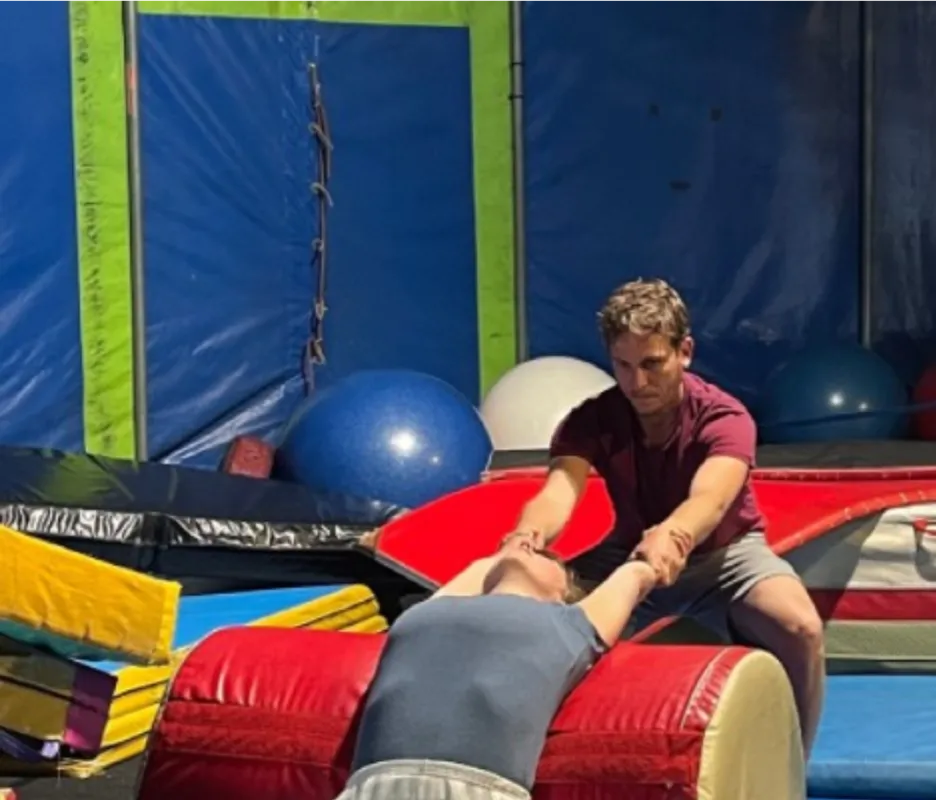
The main objective of this training is to acquire the technical and artistic skills required for the TIAC prerequisites. Trainees develop their mastery of the five main circus arts disciplines. In acrobatics, they learn to perform a sequence including a forward roll, a backward roll, a cartwheel, a roundoff, and a balancing act. In juggling, they work on a complete three-ball routine, a simple passing routine with three clubs per person, as well as the fundamentals of the diabolo, devil stick, rings, cigar boxes, and spinning plates. Aerial disciplines are explored through the performance of a sequence of ten simple figures on the fixed trapeze. Object balancing includes a tightrope routine, a twenty-meter unicycle course with a figure-eight, two different ascents and descents on a roller board, and movement on a balance ball. Finally, each participant must prepare and present a full-length act to develop their artistic expression and stage presence.
The teaching is based on a progressive pedagogy alternating between theory and practice. The training begins with familiarization with circus equipment, including the presentation of the different apparatus, their operation, and the fundamental safety rules specific to each discipline. Trainees then work on various specific warm-up exercises, technical fundamentals, spatial awareness, movement, coordination, dissociation and association of movements, laterality exercises, breathing, eye contact, body communication, and movement quality. Learning relies on a demonstrative, explanatory, and experiential method that alternates between demonstrations, individual exercises, group workshops, practical scenarios, and theoretical input to consolidate technical skills while developing the autonomy of future instructors.
Educational support is provided throughout the training. At the halfway point, an individual demonstration allows for the assessment of each trainee's progress according to three levels: mastered, in progress, or not yet mastered. At the end of the course, participants take a mock test replicating one or more official TIAC prerequisite tests to simulate real exam conditions. A multiple-choice questionnaire covering equipment and safety rules completes this assessment. A training certificate is awarded to participants who have completed the course.
This preparatory course serves as a true gateway to the TIAC (Therapeutic, Instructional, and Artistic Circus) program and careers in circus arts education. Beyond acquiring technical skills, it allows future instructors to develop a solid circus culture, adopt best practices in safety, understand the pedagogical requirements for working with diverse audiences, and approach artistic disciplines with a creative, technical, and educational perspective. The skills acquired during this preparatory course then facilitate access to the TIAC program, which delves into the design of educational sessions, the professional environment, the history of the circus, regulations, the prevention of gender-based and sexual violence, environmental responsibility, and the management of educational projects within FFEC-accredited circus schools.
Held at La Grainerie – Fabrique des Arts du Cirque et de l'Itinérance in Balma, near Toulouse, this training program is for anyone interested in teaching circus arts: artists wishing to share their expertise, instructors, future teachers, those undergoing career changes, or enthusiasts wanting to acquire the technical and pedagogical skills necessary to lead circus activities. To enroll in the program, candidates must be at least 17 years old, provide a medical certificate of fitness to practice circus arts, and be in good physical condition.
The program begins with a 168-hour foundation module, running from September 1st to October 16th, 2026, representing six weeks of training at twenty-eight hours per week. Trainees can then further their learning with four intensive modules totaling an additional 56 hours, spread over four weekends. The first focuses on acrobatics (November 7th and 8th), the second on object balancing and juggling (November 14th and 15th), the third on aerial disciplines (November 21st and 22nd), and the fourth delves deeper into object balancing and juggling (December 4th and 5th, 2026). The intensive modules can be taken independently, provided that an entry assessment is passed if the foundation module has not been completed.
The main objective of this training is to acquire the technical and artistic skills required for the TIAC prerequisites. Trainees develop their mastery of the five main circus arts disciplines. In acrobatics, they learn to perform a sequence including a forward roll, a backward roll, a cartwheel, a roundoff, and a balancing act. In juggling, they work on a complete three-ball routine, a simple passing routine with three clubs per person, as well as the fundamentals of the diabolo, devil stick, rings, cigar boxes, and spinning plates. Aerial disciplines are explored through the performance of a sequence of ten simple figures on the fixed trapeze. Object balancing includes a tightrope routine, a twenty-meter unicycle course with a figure-eight, two different ascents and descents on a roller board, and movement on a balance ball. Finally, each participant must prepare and present a full-length act to develop their artistic expression and stage presence.
The teaching is based on a progressive pedagogy alternating between theory and practice. The training begins with familiarization with circus equipment, including the presentation of the different apparatus, their operation, and the fundamental safety rules specific to each discipline. Trainees then work on various specific warm-up exercises, technical fundamentals, spatial awareness, movement, coordination, dissociation and association of movements, laterality exercises, breathing, eye contact, body communication, and movement quality. Learning relies on a demonstrative, explanatory, and experiential method that alternates between demonstrations, individual exercises, group workshops, practical scenarios, and theoretical input to consolidate technical skills while developing the autonomy of future instructors.
Educational support is provided throughout the training. At the halfway point, an individual demonstration allows for the assessment of each trainee's progress according to three levels: mastered, in progress, or not yet mastered. At the end of the course, participants take a mock test replicating one or more official TIAC prerequisite tests to simulate real exam conditions. A multiple-choice questionnaire covering equipment and safety rules completes this assessment. A training certificate is awarded to participants who have completed the course.
This preparatory course serves as a true gateway to the TIAC (Therapeutic, Instructional, and Artistic Circus) program and careers in circus arts education. Beyond acquiring technical skills, it allows future instructors to develop a solid circus culture, adopt best practices in safety, understand the pedagogical requirements for working with diverse audiences, and approach artistic disciplines with a creative, technical, and educational perspective. The skills acquired during this preparatory course then facilitate access to the TIAC program, which delves into the design of educational sessions, the professional environment, the history of the circus, regulations, the prevention of gender-based and sexual violence, environmental responsibility, and the management of educational projects within FFEC-accredited circus schools.
3€00
2€00
Softball 70 or 120g
The best-selling toy for beginners! Doesn't roll away, soft to the touch, easy to grasp. Perfect for developing motor skills and confidence.
2€50
2€00
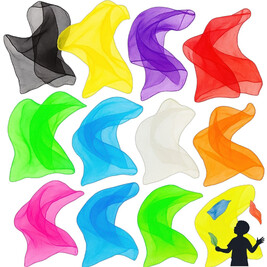
NetJuggler Juggling Scarf
Ideal for children aged 4 and up to discover the sport. Slow flight: understanding rhythm and developing coordination.
4€00
3€00
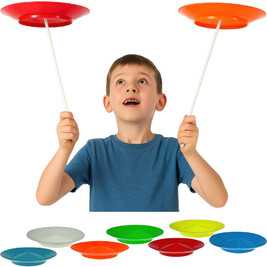
Soft Chinese plate + chopsticks
Essential for beginners! Made of unbreakable, flexible plastic, ideal for success and confidence. Perfect for schools.

4€00
3€20
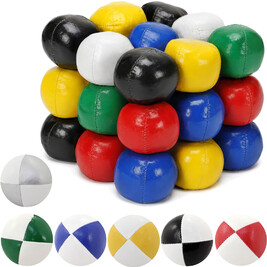
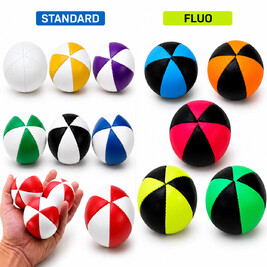
Star beanbag
Ergonomic 6-panel design for a better grip. Robust, ideal for all levels and for developing dexterity.
24€50
18€50
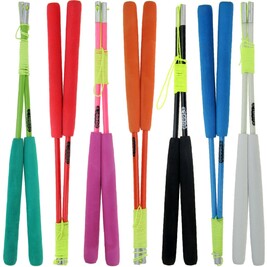
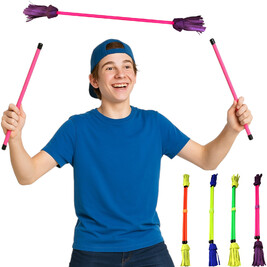
NEO flower stick set
Full silicone grip for a perfect hold. The complete kit for learning safely and without slipping.