The Fabulous Story of BasarKus – Compagnie Lamento & Académie Fratellini
From 29 september 2026 to 31 may 2027
Galway (Ireland) From 14 to 18 october 2026
Baboró Festival
Gonfreville-l'Orcher From 10 to 12 hanuary 2027
The Pointe de Caux
Achères From 11 to 12 hanuary 2027
The Sax
Champigny-sur-Marne From 14 to 16 hanuary 2027
MPT Josephine Baker
La Motte-Servolex From 22 to 23 hanuary 2027
Saint John's Hall
Annecy From 26 to 29 hanuary 2027
Collines Theatre
Cesson-Sévigné Le 04 february 2027
The Bridge of Arts
Montargis From 16 to 17 february 2027
Tivoli Room
Segré-en-Anjou-Bleu From 18 to 19 february 2027
The Cargo
Salzburg (Austria) From 20 to 22 february 2027
BimBam Festival
Nérac From 02 to 03 march 2027
Albret area
Vienna From 09 to 10 march 2027
François Ponsard Theatre
Étampes From 12 to 13 march 2027
Étampois Theatre
Aubergenville From 16 to 17 march 2027
Nacelle Theatre
Martignas-sur-Jalle From 23 to 24 march 2027
Quérandeau Space / Let's Go Simone!
Château-Thierry From 06 to 07 april 2027
The Exchange / KIDANSE Festival
Saint-Jean-de-Braye From 07 to 09 april 2027
The Flight
Vallet From 11 to 16 april 2027
Champilambart
Kingersheim From 16 to 17 april 2027
Tival Space / Waiting for Momix
Haguenau From 01 to 03 may 2027
Theatre / Festival L'Humour des Notes
Arques From 04 to 05 may 2027
Balavoine Room
Marseille From 20 to 22 may 2027
Massalia Theatre
Échirolles From 23 to 26 may 2027
The Ramp
Schaan (Liechtenstein) From 30 to 31 may 2027
TAK Theater
Mornant Le 29 september 2027
Jean Carmet Theatre
Auray Le 28 october 2027
Athena Cultural Center
Le Perreux-sur-Marne From 05 to 06 november 2027
Marne Riverbanks Center
Sibiu (Romania) From 21 to 22 november 2027
Sibiu Young Festival
Epinal From 23 to 25 november 2027
Vosges Scenes
Istanbul (Türkiye) From 28 to 29 november 2027
ATTA Festival
Sene From 04 to 05 december 2027
Grain of Salt
Tournefeuille From 06 to 08 december 2027
The Stopover
Blagnac From 10 to 17 december 2027
Odyssud
Price
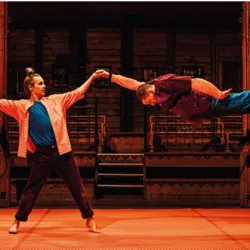
BasarKus is definitely not a creature like any other. With its two heads, multiple arms, and numerous legs, this strange being seems perfectly happy. The two parts of its body live together, roll, move forward, play, and evolve in total harmony. They don't even question anything: BasarKus has always been one.
Until the day the creature discovers that it also possesses two hearts. This revelation gives rise to a dizzying question: what if BasarKus was ultimately not one, but two?
Then begins an experience that is as disturbing as it is exciting: trying to separate.
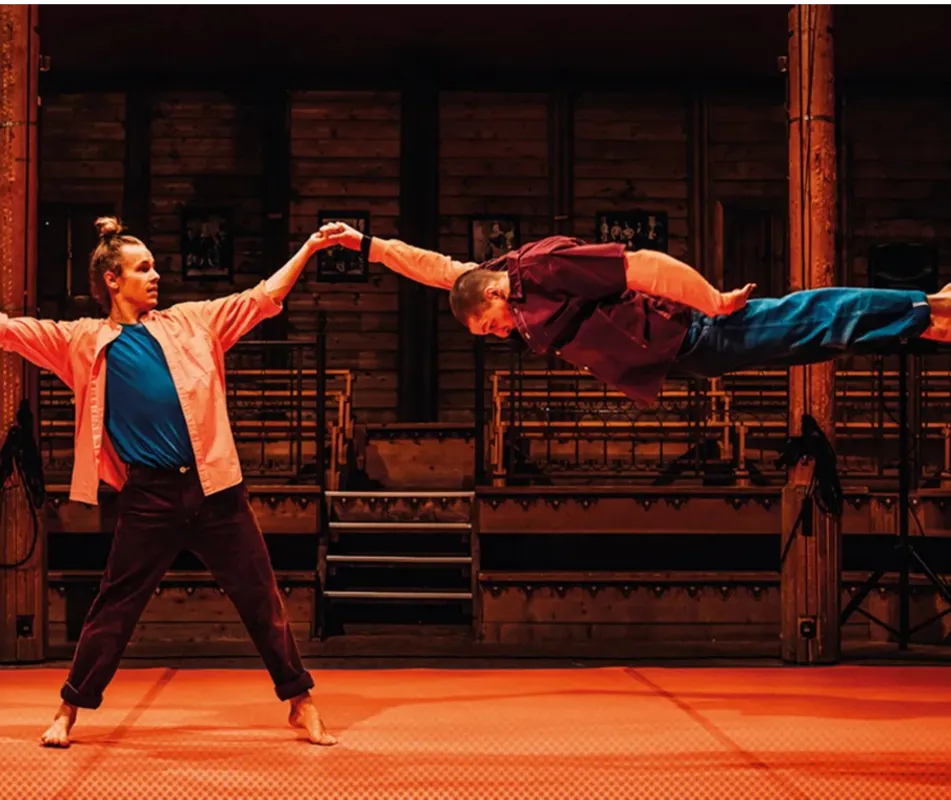
On stage, this discovery becomes a fantastic playground for the two artists. Their bodies, previously intertwined, gradually seek their independence. They cling to each other, carry each other, push each other away, contort themselves, fall, catch themselves, and invent new ways of moving. Each attempt allows the two characters to discover what they can accomplish together, but above all, what each is capable of when alone.
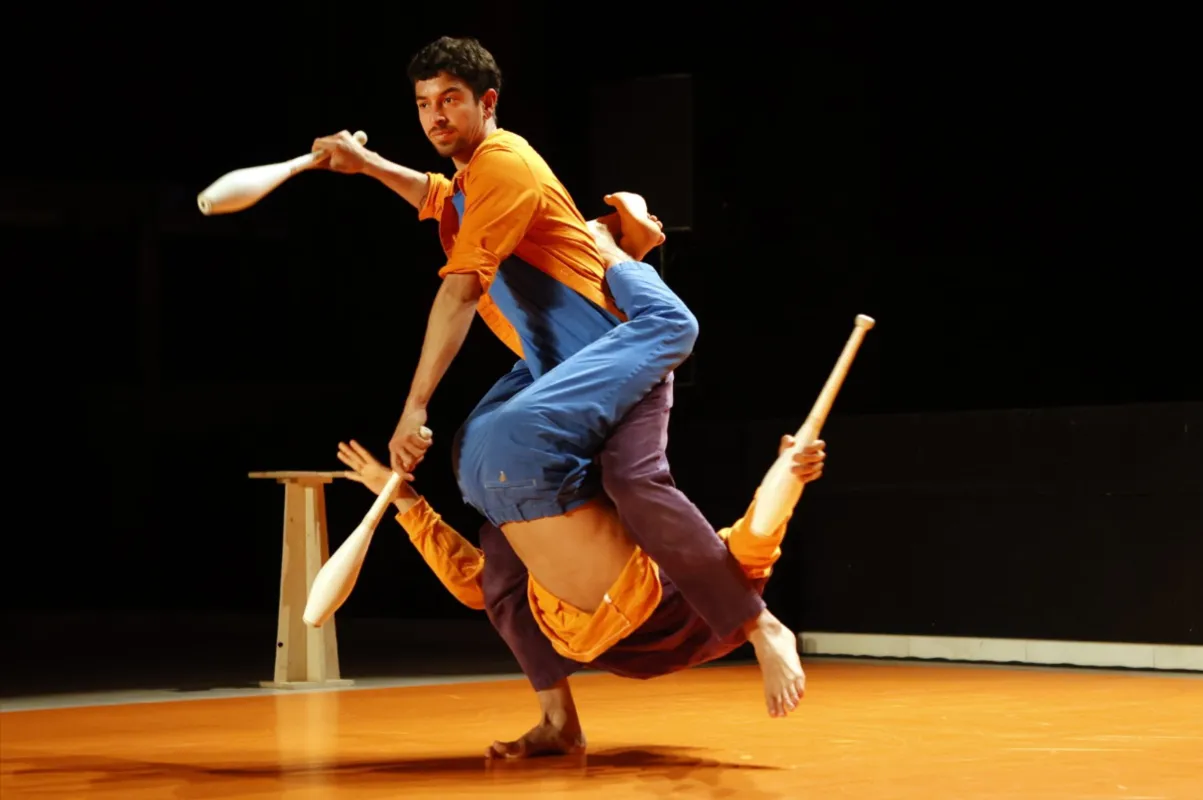
Juggling plays a significant role in this exploration. Clubs become partners in play and extensions of movement, while object manipulation intersects with lifts, balances, and acrobatic feats. Juggler and acrobat never remain confined to their respective disciplines: they constantly borrow from each other's vocabulary and construct a shared language at the intersection of contemporary circus and dance.
Contact improvisation, central to Sylvère Lamotte's choreographic work, also plays a crucial role. Weight, support, contact, and imbalances allow the performers to create the illusion of a single organism before gradually revealing two individuals. This exploration gives rise to images that are sometimes spectacular, sometimes absurd, and often very funny, in which it becomes difficult to discern where one body begins and the other ends.
Behind the physical feats and humor, a true fable about the construction of identity unfolds. How does one become oneself? Can one separate without losing the other? How does one tame the fear of doing something alone? And how does one accept that someone who resembles us nevertheless possesses their own identity?
These questions resonate particularly with childhood, a period during which autonomy and self-awareness are gradually developed. Yet, The Fabulous Story of BasarKus never seeks to provide a ready-made answer. The story is told primarily through bodies, situations, play, and movement, allowing each viewer to project their own experience onto it.
The creation was born from the encounter between Sylvère Lamotte, choreographer and founder of Compagnie Lamento, and two artists from the Fratellini Academy: Basil Le Roux and Markus Vikse. One comes from an acrobatic background, the other from juggling. This meeting of two different practices is precisely the raw material of the show: to create a dialogue between the disciplines until they seem to merge into one, before rediscovering their individual identities.
Created with Basil Le Roux and Markus Vikse, the show is now being toured by several artists in rotation: Simón Aravena, Julien Desfonds, Pablo Garretón Cortés, Ignacio Jimenez, Antonin Lebon, Basil Le Roux, Jui-Hung Li, Enrique Rosenman, Markus Vikse and Matthis Walczak.
The piece thus benefits from the virtuosity of performers from the contemporary circus, while retaining its intimate and playful character. This combination has earned it a warm critical reception: Paris Mômes describes a duo that is "mischievous and playful, impressive and funny," while Télérama awards it TTT – Very good, highlighting in particular the body language, the physical performance, and the way the show addresses identity.
With its short format of approximately 30 to 35 minutes depending on the performance, The Fabulous Story of BasarKus also provides a wonderful introduction to contemporary circus for young audiences. There's no need to understand lengthy dialogues: the essence is conveyed through gestures, glances, objects, acrobatics, and the physical interaction between the performers.
At once a juggling show, an acrobatic duo, a choreographic creation, and a story of friendship, BasarKus manages to address profound themes with remarkable simplicity. The circus virtuosity always serves the narrative: a thrown club, an improbable balance, or a body suspended from another become ways of telling the story of attachment, trust, and ultimately, emancipation.
Joyful, mischievous, physical, and poetic, The Fabulous Story of BasarKus is an ode to curiosity and the courage to grow up. By learning to become two, BasarKus ultimately discovers that being oneself doesn't necessarily mean losing the other. A particularly inventive family show where juggling, acrobatics, and dance come together to make the body a true language, suitable for ages 3 and up.

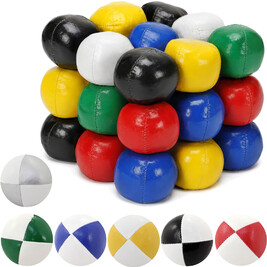
Softball 70 or 120g
The best-selling toy for beginners! Doesn't roll away, soft to the touch, easy to grasp. Perfect for developing motor skills and confidence.
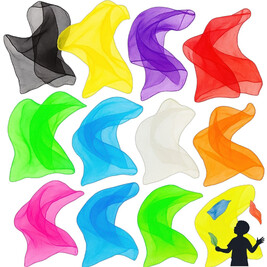
NetJuggler Juggling Scarf
Ideal for children aged 4 and up to discover the sport. Slow flight: understanding rhythm and developing coordination.
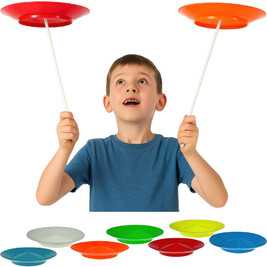
Soft Chinese plate + chopsticks
Essential for beginners! Made of unbreakable, flexible plastic, ideal for success and confidence. Perfect for schools.

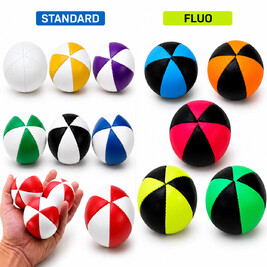
Star beanbag
Ergonomic 6-panel design for a better grip. Robust, ideal for all levels and for developing dexterity.
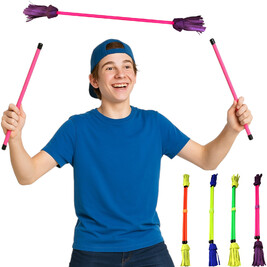
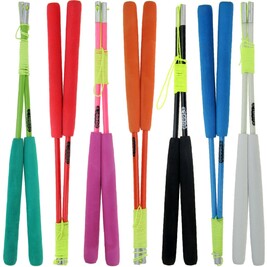
NEO flower stick set
Full silicone grip for a perfect hold. The complete kit for learning safely and without slipping.