
How to properly hit your aerial hoop: a complete guide
Introduction to aerial hoop tape
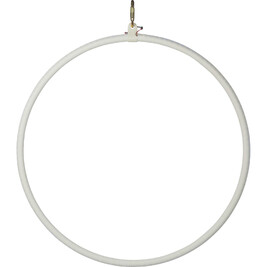
In the world of aerial arts, one of the most frequent questions from both students and studio managers concerns aerial hoop tape (also called " taping" ). This adhesive cotton covering, which is wrapped around the steel tube of the lyra (aerial hoop), radically changes the feel of the practice. Should you use it? How do you apply it correctly? This article provides a complete overview to help you understand, choose, and apply tape like a pro.
Why is tape so important?
Tape primarily serves to improve grip —that is, the adhesion between skin or clothing and metal—to secure holds. It also provides welcome comfort by softening the contact, reducing friction, and eliminating the cold feeling of the steel tube. Finally, it protects the paint or powder coating (a baked-on colored finish) from scratches, while also allowing for aesthetic customization through color selection.
For artists who prefer the feel of bare metal, it's perfectly possible to practice without tape, especially with painted or powder-coated hoops. However, most studios and professionals choose to use it for safety and hygiene reasons.
Choosing the right tape measure: criteria and mistakes to avoid
Good aerial hoop tape is made of woven cotton ( cloth tape ), a material that is both flexible and strong and tears easily by hand. Its ideal width is between 2.5 and 3.8 cm , allowing for even wrapping without creases. Slightly stretchy models ( cotton and elastane blend ) offer a smoother and more comfortable application.
It's best to avoid PVC insulating tapes or overly sticky gaffer tape , which leave a tacky residue and deteriorate in sunlight. Color also plays a role: dark shades hide dirt better, while white may appear stickier at first.
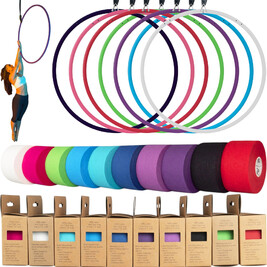
Snake Tape - Prodigy
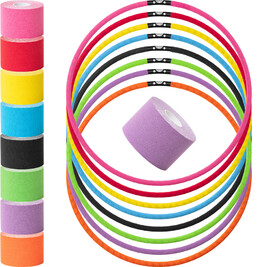
Stretchy tape - aerial
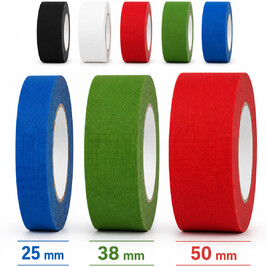
Aerial adhesive 50m - Firetoys
Prepare the hoop before installation
Before opening the roll, take the time to carefully inspect the hoop: welds, tabs , and paint condition. Any structural defects must be corrected before applying the tape. Then clean the tube with isopropyl alcohol to degrease it and let it dry completely. This step is crucial for the adhesive to bond securely.
How to apply tape: the professional method
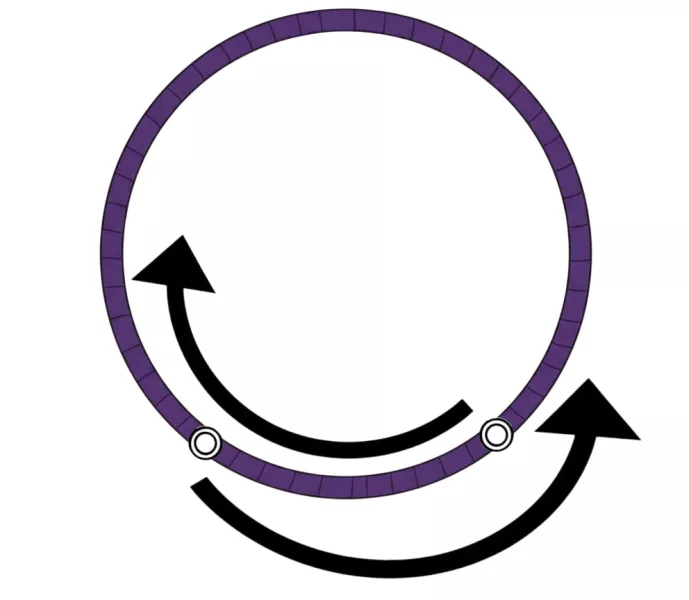
The classic technique involves imagining the hoop as a clock face. Place the tab at the top ( 12 o'clock ) and begin wrapping at the bottom ( 6 o'clock ), positioning the ribbon at an angle ( 30–45° ). Wrap each loop around the hoop, overlapping it by about one-third of its width. Smooth the loop regularly with your palm to prevent bubbles.
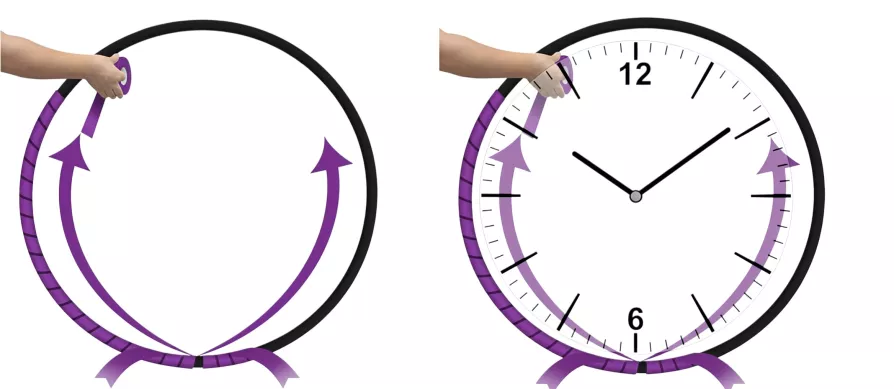
A trick used by many coaches: make two separate layers, one on the left half of the hoop and the other on the right half. This method reduces the risk of the edges "rolling" (lifting up) when you slide your hands through.
For perfectionists, lightly dusting with chalk or magnesium carbonate after application helps neutralize excess stickiness. Then let the hoop rest for 24 hours before intensive use.
Color-coded zones for you teachers
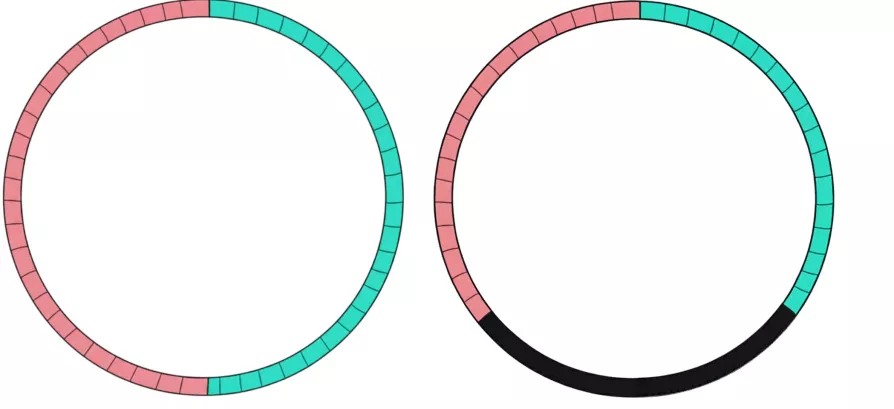
If you teach aerial arts, you can use different colored tape to create zones around your hoop. It's so difficult to talk about right or left to students. With colored zones and markings, you can give them precise directions.
One or two coats: which thickness should I choose?
Most practitioners are satisfied with a single layer , which offers a balanced grip and doesn't significantly alter the tube's diameter. A second layer can be added to the lower part of the hoop (zone 5 o'clock to 7 o'clock ) for extra cushioning during seated tricks or prolonged holds.
Maintaining and replacing the tape
A well-applied tape has a lifespan that depends on the intensity of use: a few weeks with daily studio use, several months for an amateur. Wipe it regularly with a dry cloth to remove sweat and dust. When it becomes fuzzy or shiny, it's time to replace it.
To remove it, cut one end and unwind following the spiral. If any adhesive remains, rub with vegetable oil or isopropyl alcohol, then clean thoroughly before applying a new tape.
Common problems and simple solutions
- Tape too sticky : lightly sprinkle with chalk and do a few warm-up sessions to "break in" the surface.
- Edges that roll : check the direction of application and the overlap; avoid stretching the tape excessively.
- Creases or bubbles : use a narrower width of ribbon and reduce tension while winding.
Safety and best practices
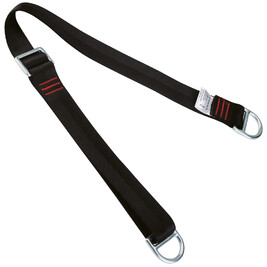
Never tape the anchor points: they must remain visible for inspection. Regularly check the condition of the hoop and the entire suspension chain ( shackles , straps , swivel ). Always store the hoop in a dry place away from heat, as the tape's adhesive can degrade in sunlight.
In summary
Tapping an aerial hoop is a simple skill, but it requires a bit of technique. With the right ribbon, careful preparation, and consistent placement, you'll improve both your safety and comfort . This guide is a practical reference for studios, artists, and individuals who want to achieve professional results on their first try.
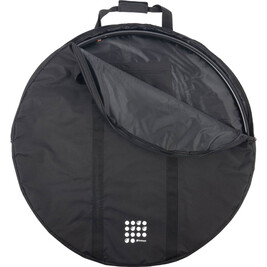
Aerial Hoop Cover - Firetoys
Allows you to store your aerial hoops up to 105cm in diameter.
Aerial adhesive 50m - Firetoys
Adhesive tape/grip for aerial equipment. For trapezes and aerial hoops.
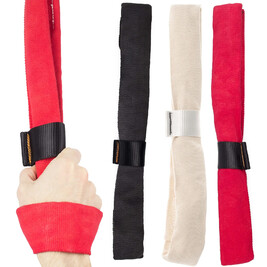
Staffordshire Bull Terrier with cotton loop - Firetoys
49cm Air Staffordshire Bull Terrier. Covered in cotton
Comments
!Be the First to comment!
