Juggling scarves – Set of 3 nylon scarves
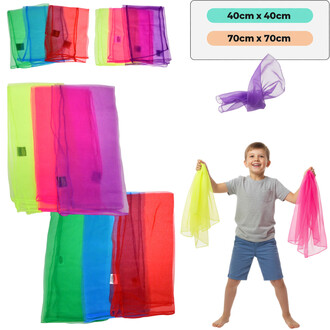
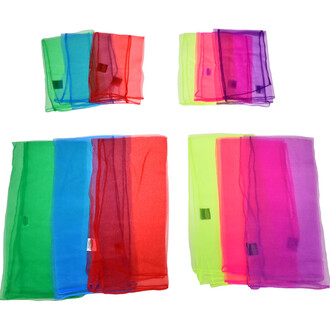
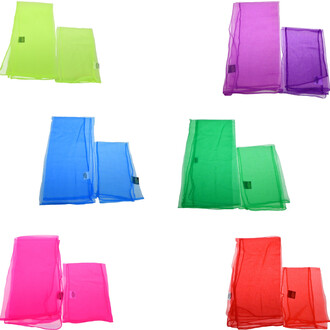
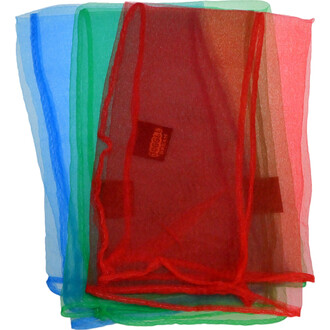
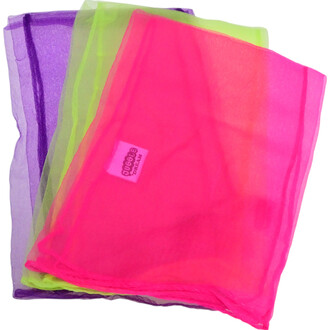
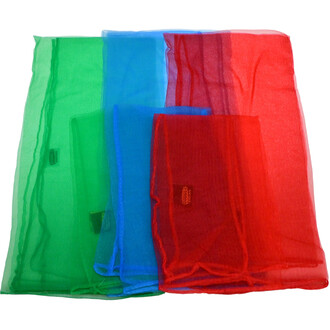
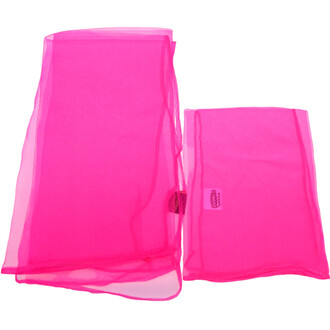
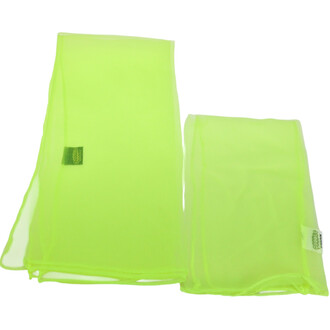
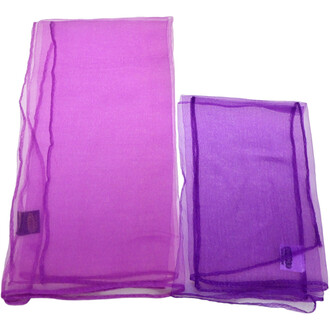
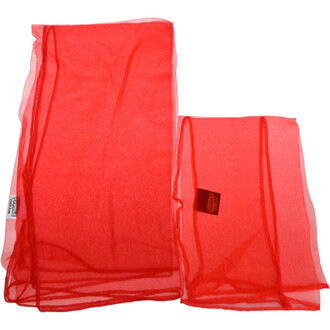
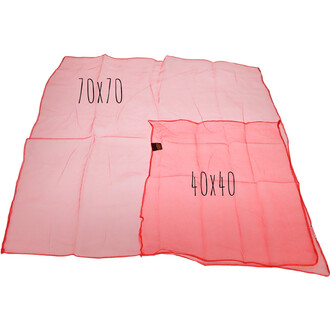
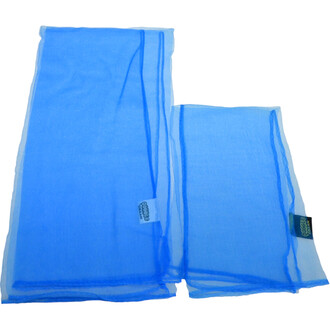
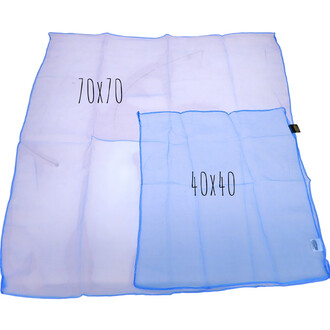
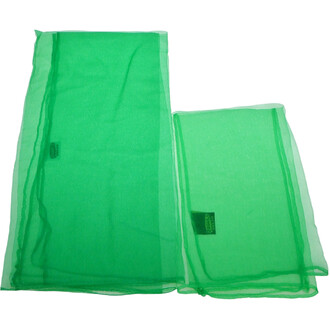
This product is a set of 3 nylon juggling scarves (sewn edges).
Juggling scarves:
This pack contains three lightweight and fluid juggling scarves . Their slow descent allows time to read the trajectories, coordinate the hands, and establish a rhythm. Ideal for introducing juggling in schools, community groups, and professional settings.
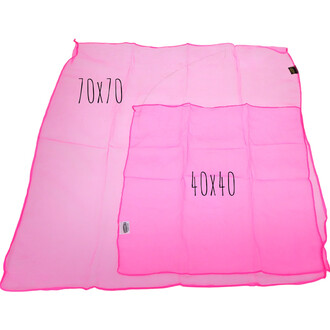
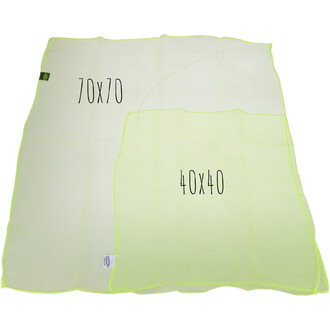
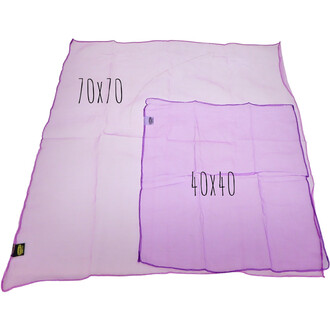
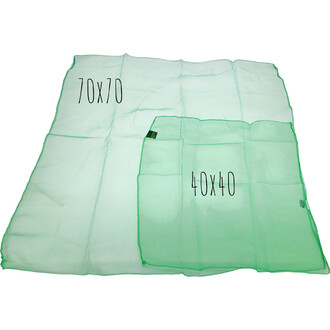
Note: the three scarves in a set are the same size (40×40 or 70×70) depending on the option selected.
NetJuggler's opinion:
We have put a recommended age in relation to the size, but it is good to note that large scarves take up a lot of space in front of a child, small scarves although they come down faster, take up less space and will make it easier to concentrate on rhythm exercises (even with a teen/adult audience).
For associations and schools : scarves often constitute the most accessible step to approach three-object coordination before moving on to balls.

Technical specifications:
- Material: Nylon , stitched edges.
- Sizes available:
- 40 cm × 40 cm (small size)
- 70 cm × 70 cm (large format)
- Color assortments:
- Red • Blue • Green
- Yellow • Pink • Purple
- Colour information: depending on the stock, the colours may vary slightly (compared to our photos).
- Pack contents: 3 scarves (all the same size).
For what type of practice?
- 40×40 cm : recommended from ~ 4/5 years old . Compact size, reduces collisions.
- 70×70 cm : recommended from ~ 7/8 years old . More visual, even slower descent.
- Ideal for circus initiation , psychomotor skills , rehabilitation and inclusive workshops.
- Practical tip: 3 scarves per juggler to learn the basics with three objects.
Wash the juggling scarves
Recommended washing: ideally by hand, cold water , mild soap , rinse without wringing; otherwise, machine wash in a mesh bag , wool/cold cycle, very gentle spin . Dry flat or hang in the shade ; do not tumble dry .
Pro Guide – Scarf Juggling: Methods, Maintenance & Pedagogy
Why start with scarves?
- Slow descent : allows time to read the trajectory, coordinate hands and establish rhythm.
- Bridge to the balls : excellent stepping stone before moving on to the balls or the rings.
- Cognitive work : sequences and patterns ( ABAB , AAB ) to link motor skills and visual cues.

Verbal cues & teaching tips
Instructions if the goal is to move towards a "three-object cascade" type juggling routine.
- With 2 scarves : repeat " throw, throw, catch, catch ", visualize an "X" between the trajectories, avoid simultaneous throws.
- With 3 scarves : start " 2 in the strong hand + 1 in the other", only one throw at a time; also learn to drop cleanly.
- Suggested ages : 40×40 from ~4/5 years; 70×70 from ~7/8 years.
Teaching progressions (ready-to-use lessons)
- Warm-up and explorations (5–8 min) : 1 scarf, throws at forehead height, targets on the ground, stops on sound signal.
- Two scarves – X pattern (10 min) : “throw, throw, catch, catch”, stagger throws, avoid simultaneity.
- Three scarves – Slow cascade (10–15 min) : 2 in the strong hand, higher throws to give yourself time, column and simple box variations.
- Games and challenges (10 min) : relay, musical statue, scarf rain, course with cognitive task (announce the color, ABAB/AAB patterns).
Adaptations and inclusion (people with disabilities)
- Functional approach : adapt size/height/rhythm, supports (seated/chair), multisensory instructions.
- TSA : structured space, visual step-by-step instructions, short and reproducible routines, alternation of activity/calm.
- Visual impairment : contrasting colours, possible addition of a bell on a corner, hand-on-hand guidance, tactile and verbal instructions.
- Motor disorders/PMR : seated work, low throws, gripping (soft knot), objectives amplitude/rhythm/eye-hand coordination.
- DCD/rehabilitation : focus on bilaterality , motor planning , graduated heights; relevant mediator in ergo and psychomotricity.
Unconventional uses in circus workshops
- Rhythm & music : scarf-by-scarf choreography, musical accent by color, work on tempo and accents.
- Cross-curricular learning : patterns (maths), color sequences (working memory), "if...then" instructions (inhibition/attention).
- Expression/object theatre : appearances, masks, breaths, improvised "ribbons"; transitions between acts for young audiences.
People who bought this item also bought the following items
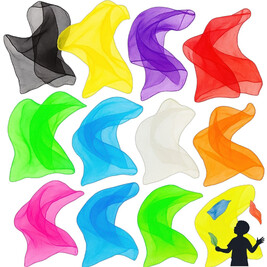
NetJuggler Juggling Scarf
Ideal for children aged 4 and up to discover the sport. Slow flight: understanding rhythm and developing coordination.
Comment / Question
!Be the First to comment!
