Snags, Holes and Tears in your Aerial Fabric
Save Your Aerial Fabric
The addict's guide
In the circus, aerial silks are much more than just apparatus: they're a lifeline, a lifeline with which performers dance several meters above the ground. When a hole or a burn appears, panic ensues. Why does the silk suffer, how can disaster be avoided, and when should the equipment be replaced? The definitive investigation.
- Tear prevention
- The Studio Manifesto
- Secure hooks
Navigate the guide:
Weapons of mass destruction
We tend to blame natural wear and tear or the quality of the fiber. But the reality is brutal: a fabric that withstands monumental dynamic loads is terribly vulnerable to the slightest local perforation.
Jewelry, Zippers and Nails
This is the number one problem reported by circus schools. It is extremely easy for a zipper, an earring, or even a simple Velcro fastener to get caught in the mesh during a slip.
Moreover, a slightly abrupt "flex" foot during an ascent with a chipped or poorly trimmed toenail , and the stitch will pop!
The "Slack Drop" syndrome
In the aviation community, slack drop is dreaded by the fibers. The intense friction of the fabric against itself at high speed causes the temperature to rise dramatically.
The result? The polyester literally melts in places, creating small hard patches ("burns") that will inevitably end up as holes.
🚫 The Betrayal of the Climbing Figure Eight
Where are the holes most of the time? In the worst possible place: at the very top of the rigging, hidden in the knot or near the anchor point.
Riggers constantly warn us: structural stress is greatest at the knot. The absolute mistake, very common among individuals, is to attach their sail to a figure-eight descender . Its sharp edges and very thin diameter crush and shear the fibers. Using a figure-eight will reduce the lifespan of your sail by half or even two-thirds!
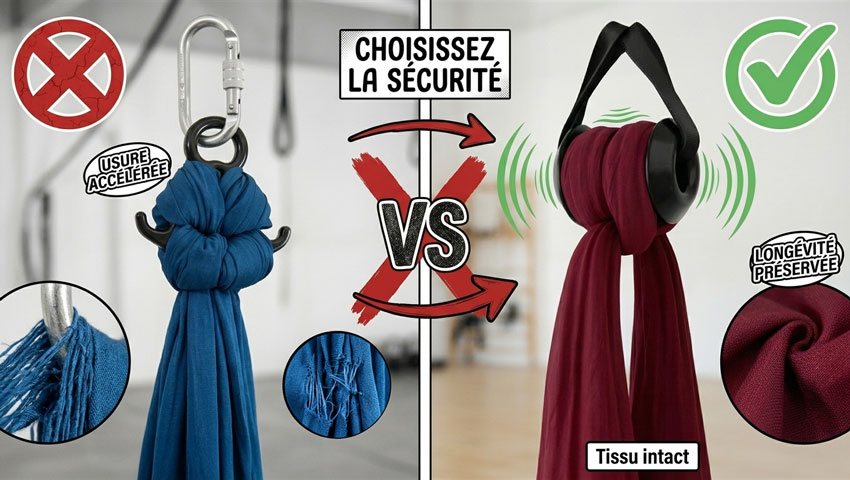
The vital alternative: The anchoring bell
To preserve the fabric's polymers , the weight must be distributed over a large, rounded surface. This is the sole function of a "bell".
Hole or Tear: The Pros' Verdict
Panic ensues when a hole is discovered. Should the equipment be immediately thrown away? The professionals' answer is based on a crucial factor: the direction of the tear, its size, and its position on the fabric.
The Spun Mesh (Small vertical hole)
Good fabrics are made of run-resistant knit . If it is a small vertical snag (lengthwise), smaller than a 20 cent coin, and ONLY if it is located less than one meter from the ground , it is considered not to affect the breaking load of the apparatus.
The studio's tip: apply a drop of clear nail polish or make 2-3 loose stitches to prevent a toe from getting stuck!
The Horizontal Tear
A tear perpendicular to the tension (across the width) means the overall integrity of the rig is compromised. The instruction is irrevocable: never fly on it again. This is the end of your fabric's life in the air.
The Slightest Doubt (Zero Risk)
Not sure what caused the tear? Does the fiber look "odd" or appear to have been burned by a fall? Don't take any risks. The ultimate goal is to avoid any accidents.
When in doubt, cut it, recycle it, or throw it away.
No penny saved is worth an artist's life. Recycle your fabric into decorations, but don't hang human beings from it anymore.
The "Fabric Manifesto"
To ensure the longevity of your equipment and everyone's safety, student education is essential. Here is the ultimate safety guidelines; feel free to print it and post it in your studio changing rooms!
📜 Aerial Studio Rules
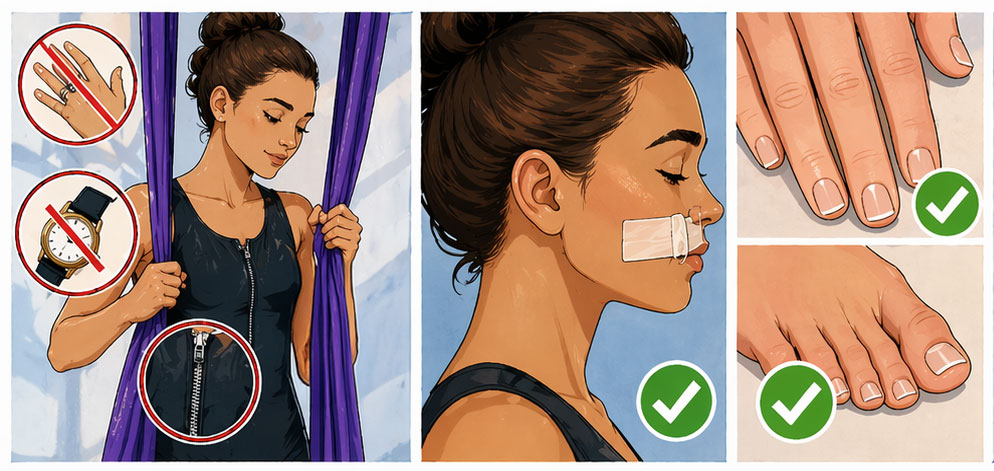
- Metal removal: It is strictly forbidden to wear a ring (even a smooth one), watch, zipper, or Velcro while wearing the jewelry. Any non-removable piercing must be secured with medical tape.
- Pedicure inspection: Fingernails and toenails must be cut short, filed, and not protruding. This is non-negotiable!
- Blind Knot Inspection: Never leave your fabrics tied indefinitely. Once a month, completely untie the top knot to check the high-pressure area.
- The Pedagogy of Drops: Don't repeat the same "Drop" 20 times in a row. Let the fiber cool down between sessions to prevent it from melting.
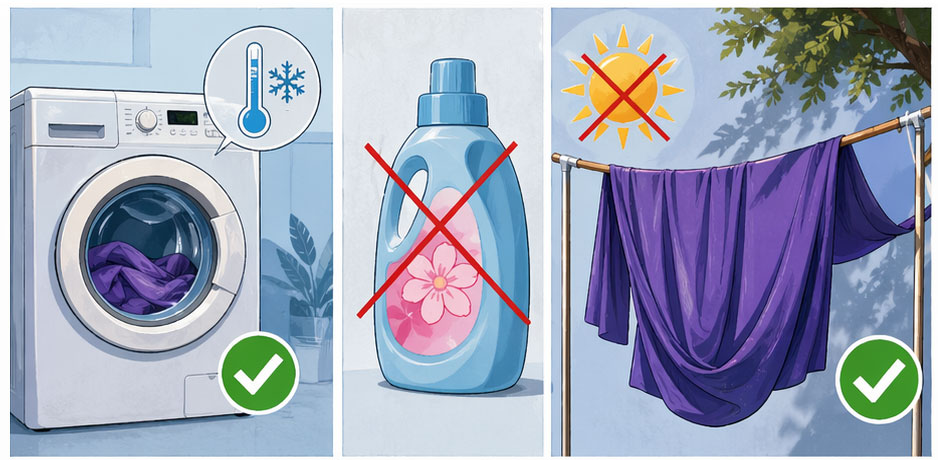
- Gentle Washing: Cold wash (30°C max). ZERO fabric softener (it makes the fibers slippery and reduces their strength). Air drying in the shade is mandatory (UV rays damage plastic).
Is it time to change equipment?
In intensive studio use, aerial fabric has an average lifespan of 8 to 12 months. Don't take any risks with damaged fabric near the landing area. Start fresh with a clean, certified base.
Width 1.50m (For Adults)
This is the standard width for the professional market. Perfect for offering ample fabric volume in the hands, ensuring comfortable footwork and secure drops for adult builds.
Width 1.30m (Slim)
A narrower width specifically designed for children and smaller hands. Less fabric means that little hands can finally close their grip around the silk without getting tired prematurely!

Good morning,
I have two quick questions.
Is the bell a different type of knot?
Next, I own a gantry crane and would like to have a rigger come for the annual inspection as advised, however I don't know where to find these professionals, do you have any advice?
Thank you and have a good day.
Good morning,
For the annual inspection of an aerial gantry, trapeze, aerial hoop or circus apparatus , we recommend using a competent technical inspection body , experienced in inspecting load-bearing structures, attachment points, lifting equipment and equipment subjected to load .
You can contact organizations such as DEKRA , Apave , Bureau Veritas , or Socotec . Depending on the region, not all of them necessarily handle this type of equipment specific to aerial circus acts .
The best solution is often to contact a local circus school or aerial arts center near you. These organizations usually know which qualified technician or accredited body can carry out the annual inspection of aerial equipment in your area.
This inspection allows us to verify the general condition of the equipment, the welds, the assemblies, the fixings, the anchor points, the stability of the structure and the conformity of use of the aerial circus equipment .
In summary, to have your aerial gantry, fixed trapeze, flying trapeze, aerial hoop or any other aerial apparatus checked, contact first and foremost a technical control body or a circus school in your region , which will be able to direct you to the right contact person.
Regarding the fabric bell jar, there are a series of step-by-step photos in the description of the fabric bell jar . If I understand your question correctly, that should answer it; otherwise, feel free to rephrase it here :-).