Juggling and Bounce Kit – BBX + G-Force
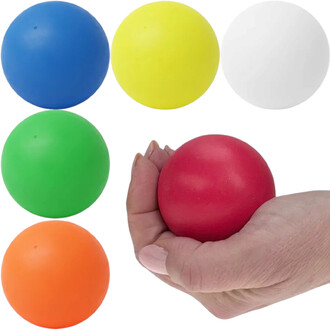
| Qte | Produit |
|---|---|
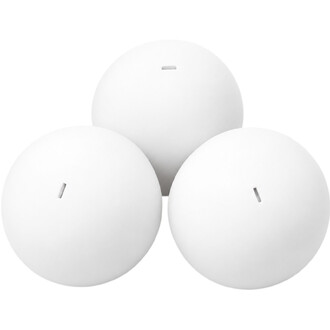
| 3x | BBX Beanbag Play Ball |
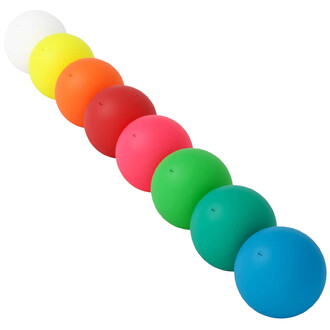
| 3x | G-Force Rebound Ball |


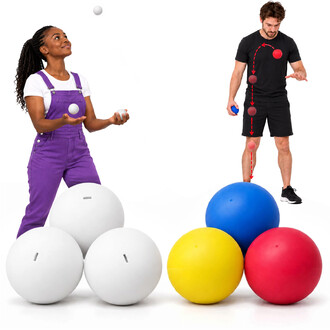
Six balls, two ways to juggle! This kit combines three 68mm BBX Beanbag Play balls for aerial juggling and three 65mm G-Force balls for bouncing. Learn tricks in the air, then explore new sensations using the ground.
Juggling & Bouncing Discovery Kit
Do you already juggle a little with three balls, or would you like to explore different facets of juggling? This kit includes two complete and complementary games to help you learn, progress, and keep things interesting. In aerial juggling, the balls are caught before they hit the ground; in bouncing, they return to your hands after touching it. The principles are similar, but the sensations are very different.
BBX balls: learning and perfecting your throws

The three 68mm BBX Beanbags from Play Juggling are soft and have low bounce: when dropped, they don't bounce around like rubber balls. Their feel and behavior make learning and practicing tricks easier. The chosen diameter is versatile and particularly suitable for teenagers and adults.
Work on the three-ball cascade, columns, crossovers, underarm throws, initial combinations, and more elaborate figures.
G-Force balls: discover the bounce

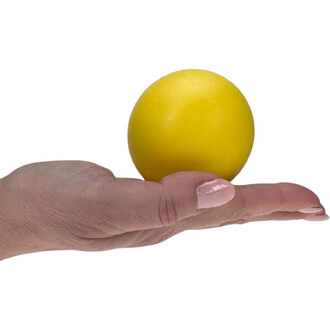
The 3 G-Force Play Juggling balls, 65 mm in diameter , are designed for passive and active three-ball bouncing. Their high-quality rubber provides a powerful and consistent bounce, with a claimed 90% rebound rate on a suitable surface . They can be cleaned with soap and water.
BBX and G-Force are two renowned brands in their respective disciplines, used regularly by experienced and professional jugglers. You can keep them to progress for a long time and supplement each set with the same models to move on to four, five, or more balls.
Passive rebounding: more time for tricks
Aerial juggling is usually the starting point: you learn to throw from one hand to the other, control the height, and coordinate your movements. Once these basics are mastered, passive bouncing can become surprisingly accessible .
To transfer the ball from right to left hand, throw the ball upwards as in a regular throw, then let it drop to the ground in front of your left foot. It will bounce and come back up into your left hand.

The trajectory is therefore: right hand → upward movement → downward movement in front of the opposite foot → rebound → left hand . At a comparable throwing height, this upward movement, downward movement, and upward movement prolong the trajectory compared to an aerial throw caught directly.
This extra time allows you to break down the movements more effectively and practice certain tricks with greater comfort. Difficult aerial sequences sometimes become more accessible; once you've mastered the basics, you can add movements, explore variations, and push the boundaries of execution. For those who already have some experience with aerial juggling, it can be a real revelation!
Active rebound: speed and dynamism
This time, the ball is sent directly towards the ground . For a pass from the right hand to the left hand, it bounces approximately between the two feet, slightly to the left, then rises towards the opposite hand.
The more direct trajectory and the use of the throw's speed and the energy returned by the ground allow for a much faster pace. Dynamic, technical, and spectacular, this style generally requires more precision and reactivity than passive bouncing: therefore, not all bouncing juggling is easier!
A deliberately simplified distinction: these explanations provide a basis for discovering the sensations of bouncing. In practice, experienced jugglers play with the height, angles, speed, trajectories and placement of bounces, with numerous nuances and sequences blending passive and active elements.
Choose a rebound surface
Aerial juggling can be practiced almost anywhere in an open space. The bounce depends directly on the ground: a smooth, flat, hard, stable and sufficiently dense surface is required.
- Smooth concrete: a good surface if it is sufficiently flat.
- Tiles: may be suitable, but the marked joints and edges, especially on small tiles, may deflect the balls.
- Marble: excellent when it is smooth, stable and well laid.
- Floor: generally unsuitable for the powerful and regular bounces sought with these balls.
- Carpets, rugs and soft flooring: unsuitable for classic rebound.
A surface that seems hard does not necessarily provide a good bounce: test several places to find the one that suits you.
NetJuggler's tip: a reclaimed marble slab
If you enjoy upcycling, look in a recycling center or a store selling salvaged materials for an old tabletop, a dresser top, or another piece of marble that's no longer needed. You can sometimes find them at very reasonable prices.
A smooth, sufficiently thick and stable board placed on the floor can provide a remarkable, consistent, and enjoyable bounce, even in a room with an unsuitable floor. This allows you to practice without being dependent on the flooring in your home.
Marble is heavy and fragile: the slab must rest perfectly flat, without being able to slip or tip over, and without any sharp edges. Adapt the installation to its weight and protect the floor if necessary.

NetJuggler's review
We find bounce juggling fascinating and would like to introduce it to more jugglers. This kit allows you to compare the sensations, practice differently, and choose what you enjoy most.
We particularly appreciate its playful aspect: it's not for everyone, but once you get a taste for it, you'll quickly want to try one trick, then another! With these two well-known models, you can continue exploring for a long time and, who knows, perhaps develop a real passion. It's a way to discover a discipline and rediscover the joy of juggling.
Who is this kit for?
- Beginner teenagers and adults: learn the basics in the air before discovering bouncing.
- Jugglers who already have some knowledge: approach their tricks differently.
- Experienced jugglers: explore the differences between aerial throws, passive and active rebounds.
- Circus schools and associations: vary the exercises in trajectory, rhythm and coordination.
- Curious: discover a fun, surprising discipline that is very different from classic juggling.
Our tips for getting started
- Start with the BBX: learn or review the three-ball cascade by aiming for consistent throws and controlled height.
- Choose your surface: smooth concrete or suitable, flat and sufficiently dense tiles.
- Try the passive bounce with a G-Force: apply the path described above, then gradually move to the three-ball cascade when your trajectories are regular.
- Discover active rebound: throw directly towards the ground to explore a faster rhythm.
- Vary the patterns: crossovers, changes of pace and height, mixtures of passive and active bounces.
- Alternate disciplines: continue your aerial maneuvers with the BBX and discover how to evolve them with the G-Force.
Practical advice: Use G-Force only on a suitable surface. Avoid uneven floors, marked joints, and fragile surfaces. Keep the area clear, away from people and fragile objects, and follow the marble slab installation precautions outlined above.
People who bought this item also bought the following items
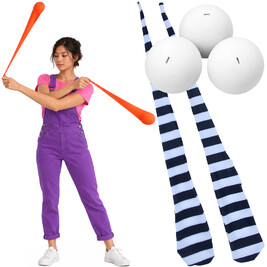
Swing Kit: balls and sock bolas
Two disciplines with three BBX balls and a pair of sock bolas. Choice of colors
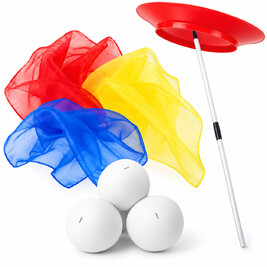
3-in-1 Kit – Discovering Juggling
3 disciplines involving balls, scarves, and Chinese plates
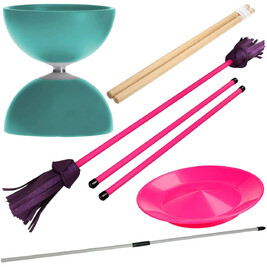
Diabolo, Flower Stick and Chinese Plate
Diabolo, flower stick and Chinese plate all together in a fun and complete kit.

Moreira ND Cigar Box - Standard
Ergonomic shape, silicone tips, visual two-tone design. Perfect for learning to juggle boxes.
Comment / Question
!Be the First to comment!
